
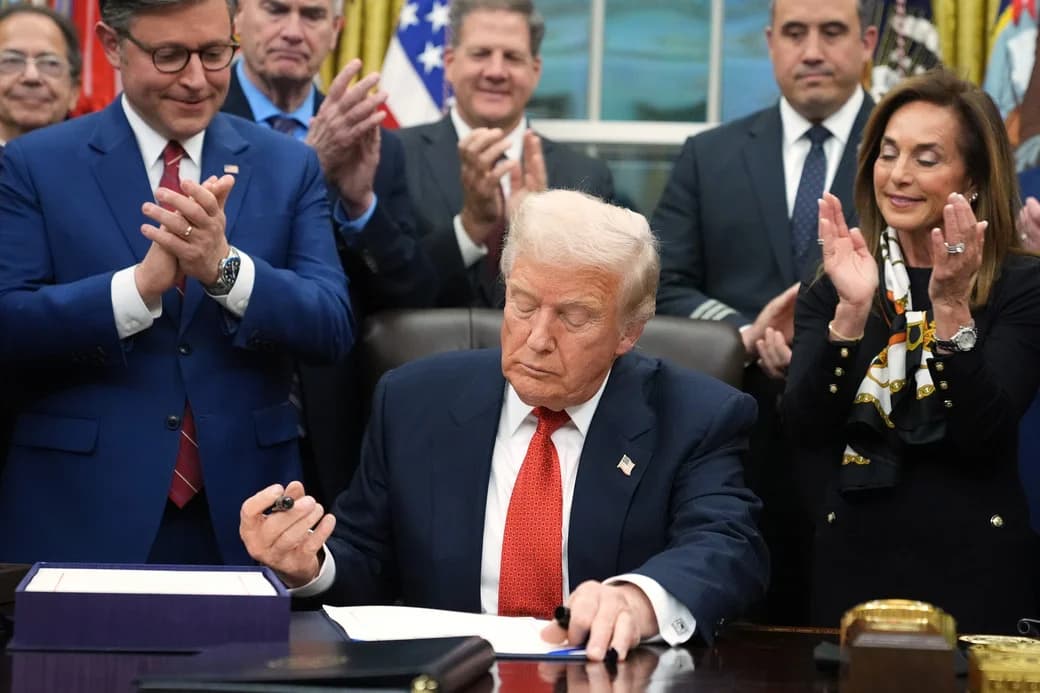
President Donald Trump on Wednesday, November 13, signed a short-term spending bill to reopen the federal government, ending the longest shutdown in U.S. history after 43 days. The House of Representatives passed the measure 222–209 just hours before Trump’s signature, following a narrow Senate approval earlier in the week. The bill restores funding for key federal agencies through January 30, 2026, allowing the government to “resume normal operations,” Trump said in the Oval Office. The law guarantees full back pay for roughly 1.4 million federal employees who were furloughed or worked wit
President Donald Trump on Wednesday, November 13, signed a short-term spending bill to reopen the federal government, ending the longest shutdown in U.S. history after 43 days. The House of Representatives passed the measure 222–209 just hours before Trump’s signature, following a narrow Senate approval earlier in the week. The bill restores funding for key federal agencies through January 30, 2026, allowing the government to “resume normal operations,” Trump said in the Oval Office. The law guarantees full back pay for roughly 1.4 million federal employees who were furloughed or worked without pay during the shutdown. It also extends funding for the Department of Agriculture, military construction, and legislative agencies for the remainder of the fiscal year. The Supplemental Nutrition Assistance Program (SNAP) will receive funding through September 2026, supporting millions of low-income Americans. The shutdown had suspended or slowed numerous federal services since October, disrupting food aid, airport security, and economic data collection. Staffing shortages at the Federal Aviation Administration (FAA) caused air-traffic delays nationwide. These disruptions are expected to ease as operations restart ahead of the busy Thanksgiving travel period. Economists estimate the shutdown reduced quarterly GDP growth and delayed multiple federal reports. Public opinion polls show Americans divided over who was most responsible roughly half blamed Republicans, while 47 percent pointed to Democrats. House Speaker Mike Johnson called the reopening “a relief for millions of families,” while President Trump said the impasse was “no way to run a country.” Congress now faces another funding deadline in January, raising the risk of renewed gridlock if lawmakers fail to reach a broader budget agreement. Healthcare subsidies and long-term fiscal reforms remain contentious points heading into the 2026 election cycle.



Comments
No comments yet. Be the first to share a thought.