
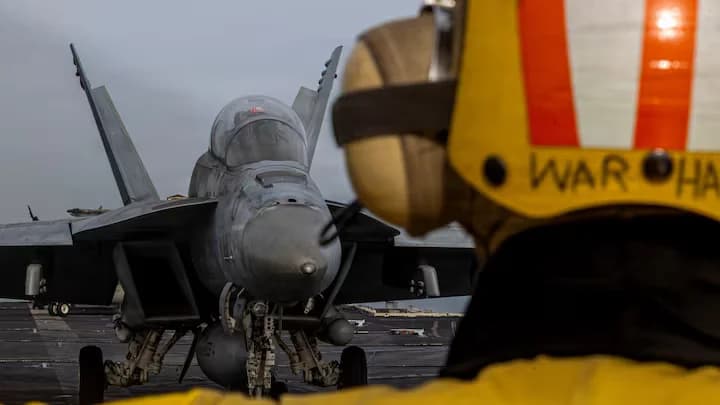
A high-risk U.S. military operation deep inside Iran has successfully rescued a stranded American airman, marking what President Donald Trump described as “one of the most daring” missions in recent history. The rescue comes amid escalating tensions in a widening conflict that has already shaken global energy markets and destabilized the Middle East. The airman, a weapons officer aboard an F-15 Eagle fighter jet shot down earlier in the week, was found wounded in a mountainous area but is expected to recover. His pilot had been rescued a day earlier. The mission reportedly involved dozens of
A high-risk U.S. military operation deep inside Iran has successfully rescued a stranded American airman, marking what President Donald Trump described as “one of the most daring” missions in recent history. The rescue comes amid escalating tensions in a widening conflict that has already shaken global energy markets and destabilized the Middle East. The airman, a weapons officer aboard an F-15 Eagle fighter jet shot down earlier in the week, was found wounded in a mountainous area but is expected to recover. His pilot had been rescued a day earlier. The mission reportedly involved dozens of U.S. aircraft and encountered fierce resistance from Iranian forces, underscoring the growing risks faced by both U.S. and allied troops in the region. Trump Issues Stark Warning to Iran Following the rescue, Trump issued a blunt ultimatum to Tehran, demanding the immediate reopening of the strategically vital Strait of Hormuz by Tuesday. The narrow waterway is a critical artery for global energy, carrying roughly 20% of the world’s oil and natural gas supply. Trump warned that failure to comply would trigger devastating strikes on Iran’s infrastructure, including energy and transportation systems. His remarks, delivered via social media, have sparked international concern, with critics arguing such actions could violate international law and further inflame an already volatile situation. Israel’s Role and Expanding Conflict Israel, a key U.S. ally, confirmed it assisted in the rescue operation and is reportedly preparing additional strikes on Iranian energy facilities. This follows recent Israeli attacks on petrochemical sites inside Iran, part of a broader campaign that has extended into Lebanon against Hezbollah. The conflict, which began on February 28 with coordinated U.S. and Israeli airstrikes, has since escalated into a regional war. Thousands have been killed, particularly in Iran and Lebanon, where ongoing air raids continue to claim civilian lives. Iran Retaliates, Targets Gulf Infrastructure In response, Iran has intensified its counterattacks, targeting infrastructure across the Gulf. Petrochemical facilities in Bahrain and Abu Dhabi have been hit, alongside earlier strikes on oil installations and industrial sites. Iranian forces have also launched missile and drone attacks on Israel and U.S. allies, signaling a willingness to expand the battlefield. Iran has maintained its grip on the Strait of Hormuz, using it as a strategic lever against global powers. The disruption has sent oil prices soaring to near $120 per barrel, placing significant strain on economies worldwide. Diplomatic Efforts Stall Attempts to broker peace, including mediation efforts led by Pakistan, have so far failed to yield results. Iran’s Foreign Minister, Abbas Araqchi, stated that Tehran seeks a “conclusive and lasting end” to what it calls an imposed war, but no breakthrough has been achieved. Meanwhile, reports suggest the U.S. employed sophisticated intelligence tactics during the rescue mission, including a deception campaign orchestrated by the Central Intelligence Agency to mislead Iranian forces about the airman’s location. A Region on Edge Despite Trump’s claims of U.S. air superiority, recent incidents—including the loss of additional aircraft such as an A-10 attack plane—highlight the persistent dangers in the conflict zone. The situation remains fluid, with both military escalation and diplomatic uncertainty shaping the next phase of the war. As the deadline for reopening the Strait approaches, the world watches closely, aware that any further escalation could have far-reaching consequences not only for the region but for the global economy.



Comments
No comments yet. Be the first to share a thought.