
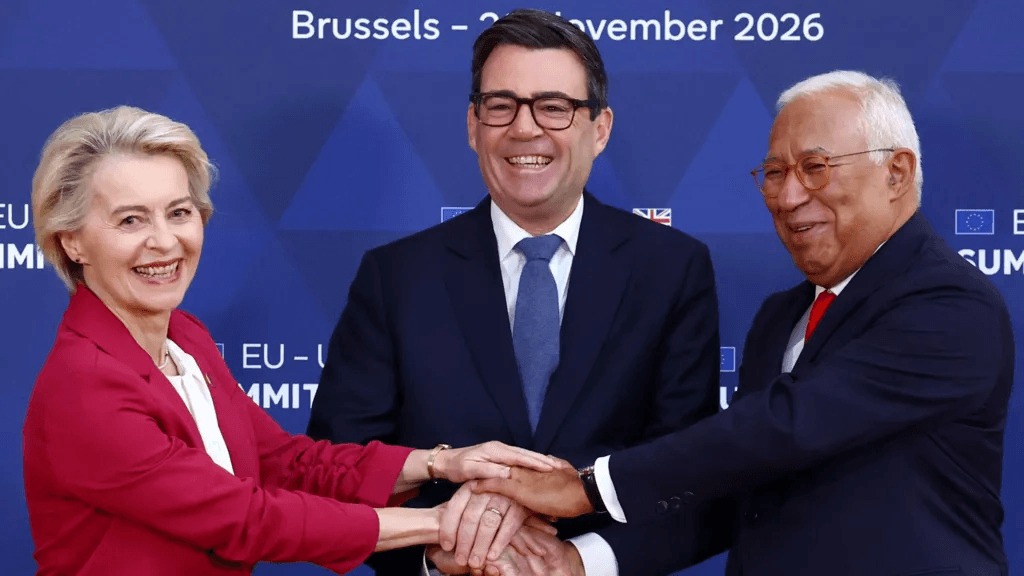
The United Kingdom and the European Union have agreed on a new package of cooperation covering food exports, carbon emissions and youth mobility, as Prime Minister Andy Burnham signals plans to explore even closer relations between the two sides.
Speaking after an EU-UK summit in Brussels, Burnham described the agreement as a “good day” for Britain and Europe, saying it could strengthen economic cooperation and deliver significant benefits to the UK economy.
According to the British Treasury's estimates cited by the government, the agreement could boost the UK economy by up to £17 billion annually.
One of the major elements of the deal is an agreement to remove most checks on British food exports to the EU from 2028. In return, the UK will align with certain European Union regulations, a move the government believes will reduce business costs and potentially lower prices for consumers.
The agreement also introduces a youth experience scheme that will allow up to 100,000 young people aged between 18 and 31 from each side to travel, work and study across the UK and EU for up to three years.
Both parties aim to make the programme available by January 2030, although discussions on university tuition fees are still ongoing. The proposed arrangement could allow students from both sides to benefit from more accessible education opportunities.
Cooperation will also extend to immigration and security, with the UK and EU committing to strengthen efforts against migrant smuggling and human trafficking through closer collaboration between law enforcement agencies and increased information sharing.
Additionally, both sides have concluded negotiations on linking their emissions trading systems, with implementation targeted for 2028.
Push for a closer relationship
Beyond the agreements already reached, Burnham said the UK and EU should consider what their long-term relationship could look like.
He revealed that both sides would begin an informal brainstorming process over the coming months to explore further opportunities for cooperation ahead of their next summit.
“Incremental steps only take us so far,” Burnham said, arguing that the current agreement represents the limit of what can be achieved during the present parliamentary term.
However, he stressed that the discussions would help inform future decisions about Britain's relationship with the European Union.
European Commission President Ursula von der Leyen described the summit as a “turning point” in relations between the two sides, while European Council President António Costa said the EU remained open to establishing the closest possible relationship with the UK.
Political criticism over the agreement
Despite the government's optimism, the deal has attracted criticism from opposition leaders, particularly over its potential impact on British sovereignty, agriculture and employment.
Conservative Party leader Kemi Badenoch argued that the agreement was unfair to British farmers, who would have to follow regulations developed by the EU. She also raised concerns that the youth mobility scheme could increase competition for employment opportunities among young British people.
Badenoch further questioned the government's projected £17 billion economic benefit, arguing that the figure lacked sufficient supporting evidence.
Meanwhile, Reform UK leader Nigel Farage described the agreement as a “betrayal of the British people”, accusing Burnham's government of weakening the country's independence following Brexit.
In contrast, Liberal Democrat leader Sir Ed Davey welcomed the youth mobility arrangement but argued that the agreement did not go far enough, calling for a more comprehensive deal with the EU.
The UK government's 2024 election manifesto ruled out rejoining the EU single market or customs union, as well as restoring freedom of movement.
The latest agreement therefore represents an attempt to strengthen economic and diplomatic cooperation without reversing the UK's departure from the European Union.
Legislation to implement the agreement is expected to be introduced in the UK Parliament next week, marking another important stage in the country's post-Brexit relationship with Europe.
Comments
No comments yet. Be the first to share a thought.