
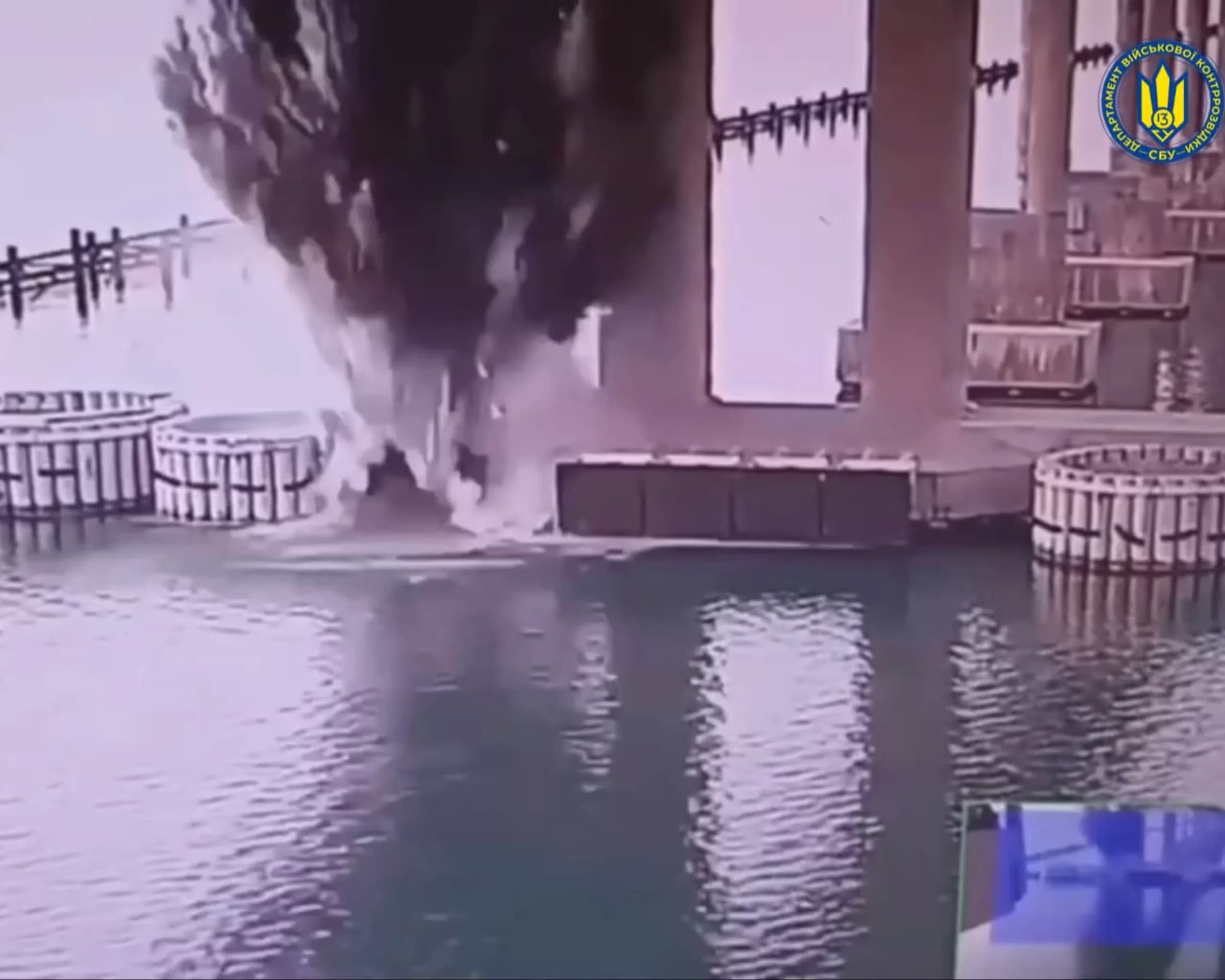
Ukraine’s SBU security service has claimed responsibility for a powerful underwater explosion that struck the strategically critical Kerch Bridge, which links Russian-occupied Crimea to mainland Russia. The blast damaged the underwater pillars of the 12-mile-long structure, a prestige project inaugurated by Russian President Vladimir Putin in 2018. As reported by The Guardian, this marks the third Ukrainian strike on the heavily guarded bridge since the beginning of Russia’s full-scale invasion in 2022. According to the SBU, the latest operation took months of planning and involved explosives
Ukraine’s SBU security service has claimed responsibility for a powerful underwater explosion that struck the strategically critical Kerch Bridge, which links Russian-occupied Crimea to mainland Russia. The blast damaged the underwater pillars of the 12-mile-long structure, a prestige project inaugurated by Russian President Vladimir Putin in 2018. As reported by The Guardian, this marks the third Ukrainian strike on the heavily guarded bridge since the beginning of Russia’s full-scale invasion in 2022. According to the SBU, the latest operation took months of planning and involved explosives equivalent to more than one metric tonne of TNT. The agency released footage showing the explosion erupting from the water and scattering debris, as well as photographs of damage to the bridge. “The bridge is an absolutely legitimate target, especially considering that the enemy used it as a logistical artery to supply its troops,” said SBU head Lt Gen Vasyl Maliuk. “Crimea is Ukraine, and any manifestations of occupation will receive our tough response.” The attack follows closely on the heels of another significant Ukrainian operation: a long-range drone assault on Russian airbases, which President Volodymyr Zelenskyy said incapacitated 34% of Russia’s strategic cruise missile carriers. These moves appear to be part of a broader effort by Ukraine to counter claims [particularly from the Trump administration] that Kyiv holds a weak position in the war. The Kerch Bridge strike comes as Ukraine prepares for a prominent diplomatic milestone: participation in the NATO summit in The Hague from June 24 to 26. President Zelenskyy confirmed the invitation and framed it as a symbolic victory against Russian efforts to isolate Ukraine. “We were invited to the NATO summit. I think this is important,” Zelenskyy said after meeting with NATO Secretary General Mark Rutte in Vilnius. Meanwhile, the diplomatic front remains tense. On Tuesday, the Kremlin downplayed hopes of any near-term resolution to the war, following stalled talks in Istanbul. Ukraine pushed for a full, unconditional ceasefire, while Russia proposed only a limited truce lasting two to three days in select areas. The negotiations included a prisoner exchange and the exchange of so-called peace “memorandums.” “The settlement issue is extremely complex and involves a large number of nuances,” said Kremlin spokesperson Dmitry Peskov. “It would be wrong to expect immediate solutions and breakthroughs.” Peskov also rejected the possibility of a trilateral summit involving leaders of Ukraine, Russia, and the United States, despite U.S. President Donald Trump expressing openness to the idea. “In the near future, it is unlikely,” said Peskov, stressing that any such meeting would require significant progress in preliminary negotiations. Ukraine’s diplomatic efforts continue on multiple fronts. Andriy Yermak, Zelenskyy’s chief of staff, and Deputy Prime Minister Yulia Svyrydenko have arrived in the U.S. to lobby for increased defense support and more stringent sanctions on Russia. In a telegram post, Yermak said “We plan to talk about defence support and the situation on the battlefield, strengthening sanctions against Russia,” As the war grinds into its third year with tens of thousands dead and millions displaced, Ukraine’s assertive military and diplomatic maneuvers reflect a country intent on reshaping the battlefield narrative.



Comments
No comments yet. Be the first to share a thought.