
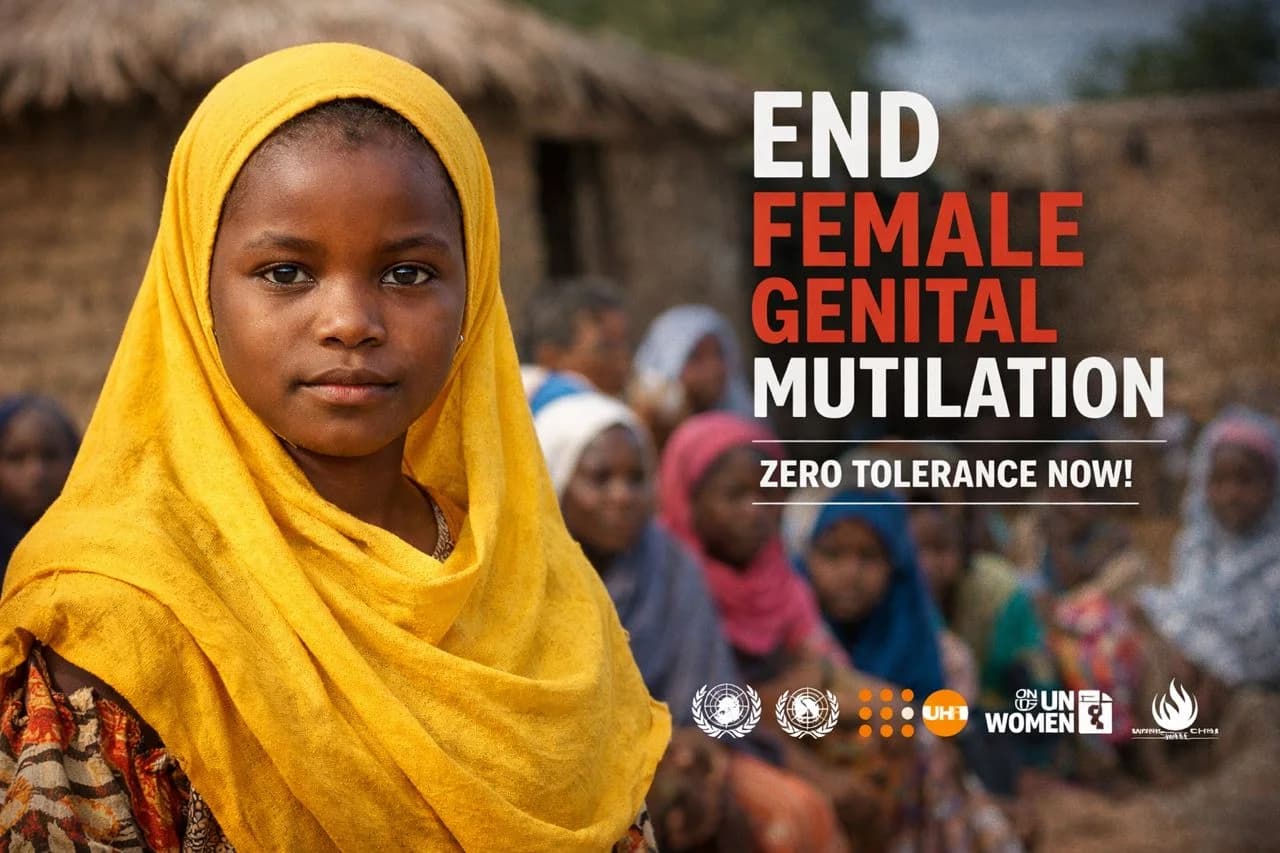
As the world marked the International Day of Zero Tolerance for Female Genital Mutilation today, the United Nations warned that millions of girls remain at risk despite decades of progress . The observance on 6 February was used to renew global attention on female genital mutilation (FGM), a harmful practice affecting girls and women in more than 30 countries and often carried out in secrecy under intense social pressure and deeply rooted norms. According to UN agencies, more than 230 million women and girls alive today have undergone FGM, while over four million girls are estimated to be at
As the world marked the International Day of Zero Tolerance for Female Genital Mutilation today, the United Nations warned that millions of girls remain at risk despite decades of progress
. The observance on 6 February was used to renew global attention on female genital mutilation (FGM), a harmful practice affecting girls and women in more than 30 countries and often carried out in secrecy under intense social pressure and deeply rooted norms. According to UN agencies, more than 230 million women and girls alive today have undergone FGM, while over four million girls are estimated to be at risk this year alone. The practice, which has no health benefits, can lead to severe bleeding, infection, childbirth complications and long-term psychological trauma. In a message marking the day, UN Secretary-General António Guterres described FGM as a grave human rights abuse. “
Female genital mutilation violates the universal human rights to life, health and bodily integrity and causes lasting harm to millions of women and girls worldwide
,” he said.
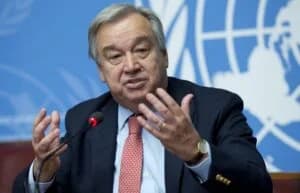
António Guterres, Secretary-General of the United Nations
Calling for stronger action, Guterres urged governments and communities to move beyond promises. “
We must ensure that every girl can live free from violence and fear,
” he added. Survivors continue to speak out about the lasting impact of the practice. Olivia Albert, a survivor and youth advocate from Tanzania, was quoted in recent reporting by Global Issues saying, “
Deep down, I knew what I had experienced was not something any girl should go through.
”

© UNFPA/Bill Marwa-Olivia Albert leads a youth advocacy group in the Mara region of the United Republic of Tanzania
A joint statement by UNFPA, UNICEF, WHO, UN Women, UNESCO and UN Human Rights emphasized that culture or tradition cannot justify FGM. “
Female genital mutilation is a violation of human rights and cannot be justified on any grounds,
” the agencies said, calling for sustained investment in prevention, education and survivor support. While progress has been recorded in several countries through legislation, community dialogue and girls’ education, the UN warns that population growth and humanitarian crises could slow gains if action is not accelerated. As the world moves toward the 2030 Sustainable Development Goals, UN leaders insist that ending FGM is both possible and urgent. The message of this year’s observance was clear: zero tolerance must be more than a slogan, it must become a lived reality for every girl, everywhere.



Comments
No comments yet. Be the first to share a thought.