
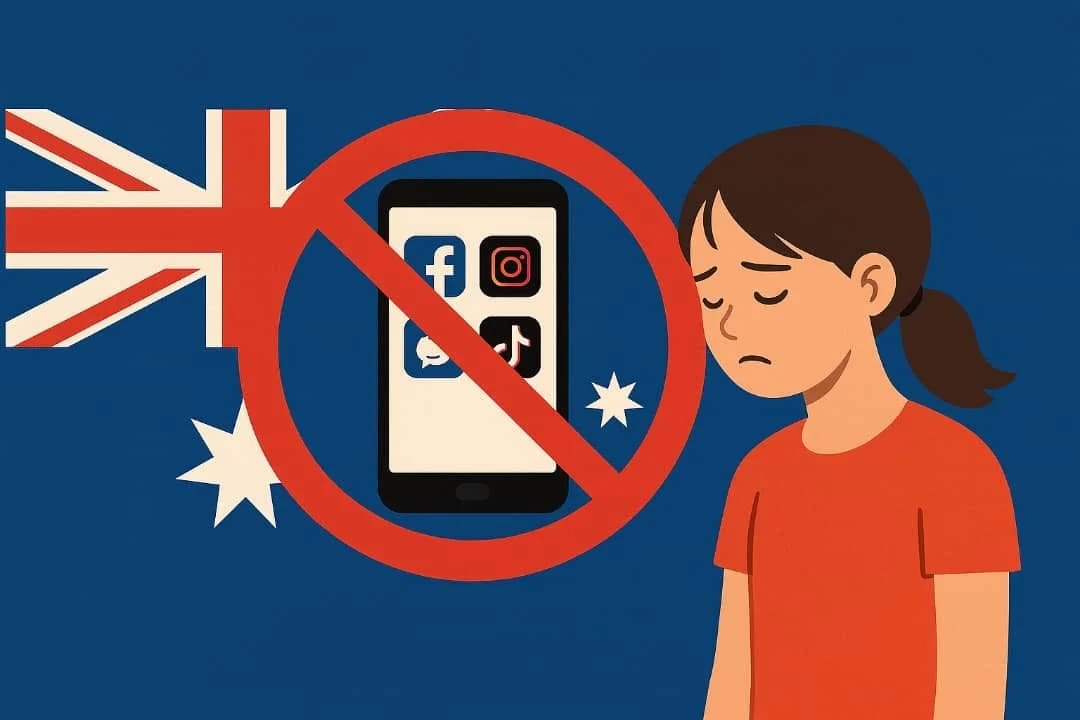
Australia is set to become the first country in the world to enforce a legally mandated minimum age of 16 for social media accounts, following a landmark decision aimed at protecting young people from online harms. Under a new law taking effect 10 December 2025, major platforms will be required to block Australians under 16 from creating or maintaining accounts. The rule applies to widely used services, including Facebook, Instagram, TikTok, Snapchat, X (formerly Twitter), YouTube, Reddit, Threads, Kick, and other platforms identified by the eSafety regulator. The law explicitly places respo
Australia is set to become the first country in the world to enforce a legally mandated minimum age of 16 for social media accounts, following a landmark decision aimed at protecting young people from online harms. Under a new law taking effect 10 December 2025, major platforms will be required to block Australians under 16 from creating or maintaining accounts. The rule applies to widely used services, including Facebook, Instagram, TikTok, Snapchat, X (formerly Twitter), YouTube, Reddit, Threads, Kick, and other platforms identified by the eSafety regulator. The law explicitly places responsibility on social media companies, not young users or parents. Platforms that fail to comply face civil penalties up to AUD 49.5 million. Importantly, children will not be criminalized, and families face no penalties. The burden falls entirely on tech companies to take “reasonable steps” to ensure under-16s are not logged in or interacting through personal accounts. Young Australians will still be able to view publicly available content across platforms, such as public YouTube videos or open posts, without logging in. However, they will not be able to create profiles, follow accounts, post, comment, join groups, or use private messaging features tied to social media accounts.

The government is putting more efforts for collaborating with parents to improve children's living.
The decision follows rising concerns about the impact of social media on children and early teens. Key motivations include:
Protecting Mental Health
According to the eSafety Commissioner, features like algorithmic feeds, disappearing “stories,” and constant notifications encourage addictive usage patterns. Research links these patterns to stress, sleep disruption, comparison anxiety, poor concentration, and increased vulnerability.
Reducing Exposure to Harmful Content
The government cited rising cases of cyberbullying, predatory behavior, and exposure to violent or sexual content, which disproportionately affect young users.
Allowing Time for Maturity
The policy aims to give children space to develop resilience, digital literacy, impulse control, and critical thinking before entering full social media environments.
Protecting Privacy and Data
Children often don’t fully understand how platforms collect and use personal data. The law aims to reduce profiling and exploitation of minors’ information.
Easing Pressure on Parents
With the rule applying equally to all under-16s, parents no longer have to decide individually whether to permit social media access; the responsibility shifts to the platforms. The law does not demand universal ID checks. Instead, companies may use a mix of age-assurance technology, behavioral analysis, and verification alternatives that avoid overly intrusive data collection.


Some platforms are exempt, especially those focused on education, health support, gaming, and direct messaging, rather than social networking. If successful, Australia’s approach could influence governments worldwide navigating youth mental-health concerns and online-safety debates. However, experts warn that young people may simply migrate to less regulated platforms or attempt to fake their age, challenges that regulators will need to monitor.



Comments
No comments yet. Be the first to share a thought.