
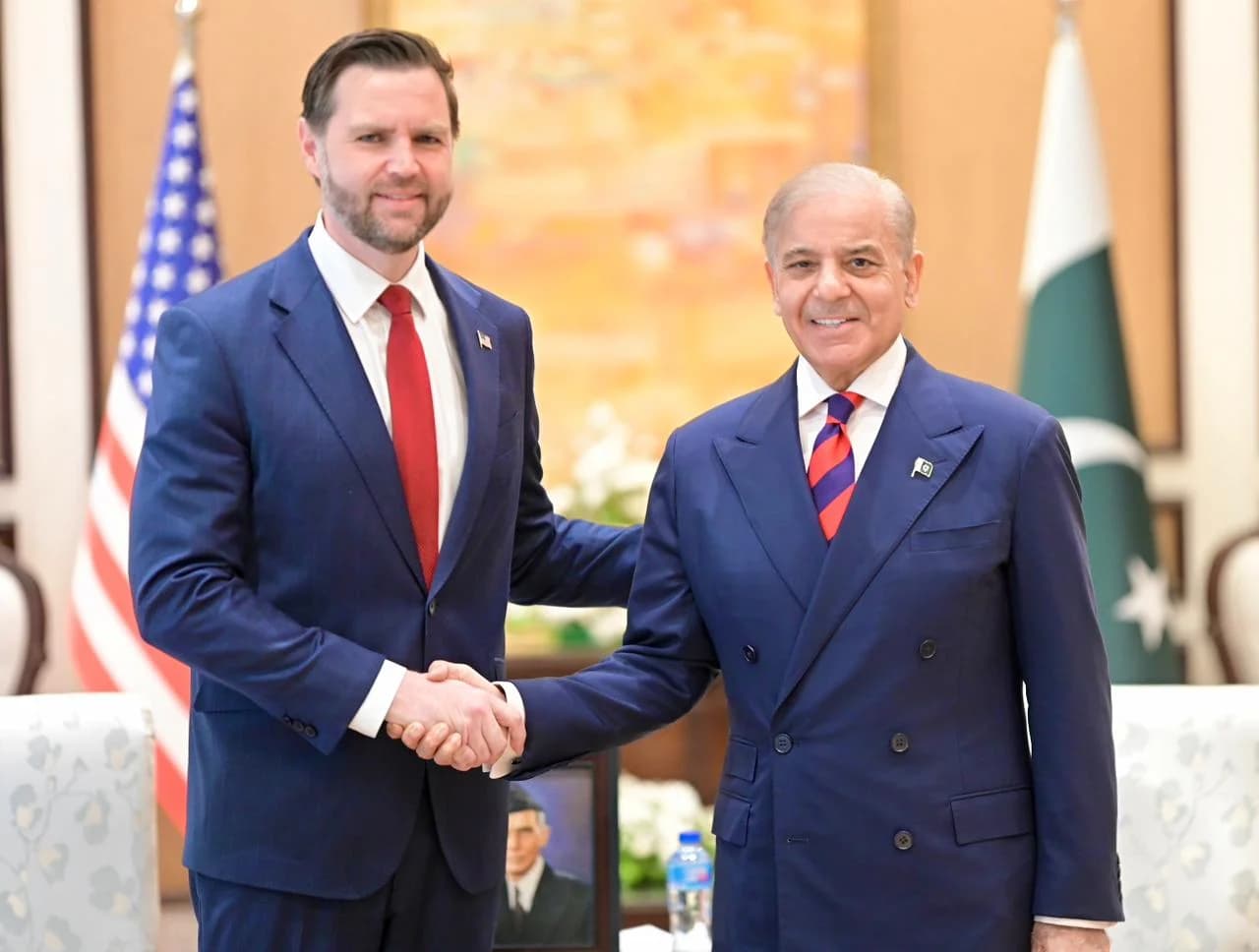
High-level diplomatic efforts intensified in Islamabad as delegations from the United States and Iran held separate meetings with Pakistan’s Prime Minister Shehbaz Sharif ahead of anticipated peace negotiations. The meetings come at a critical moment, with both sides attempting to build momentum toward a broader agreement following a fragile two-week ceasefire. Pakistan has positioned itself as a key mediator, facilitating indirect communication between Washington and Tehran. The U.S. delegation, led by Vice President JD Vance , included Special Envoy Steve Witkoff and senior adviser Jared Kus
High-level diplomatic efforts intensified in Islamabad as delegations from the United States and Iran held separate meetings with Pakistan’s Prime Minister Shehbaz Sharif ahead of anticipated peace negotiations.
The meetings come at a critical moment, with both sides attempting to build momentum toward a broader agreement following a fragile two-week ceasefire. Pakistan has positioned itself as a key mediator, facilitating indirect communication between Washington and Tehran.
The U.S. delegation, led by Vice President JD Vance, included Special Envoy Steve Witkoff and senior adviser Jared Kushner. During their meeting, Prime Minister Sharif expressed optimism that the talks could serve as a foundation for lasting regional peace.
Earlier, Sharif also met with the Iranian delegation led by Mohammad Bagher Ghalibaf, alongside Foreign Minister Abbas Araghchi. While Iranian officials signaled “good intentions,” they also emphasized deep mistrust toward the United States, warning that negotiations could collapse if Tehran’s conditions are not met.
At the heart of the discussions are contentious issues including sanctions relief, the unfreezing of Iranian assets, and the future of regional conflicts, particularly in Lebanon. Disagreements persist over whether the ongoing Israel-Hezbollah conflict should be included in the ceasefire framework.
Iran has reportedly submitted a 10-point proposal calling for a complete cessation of hostilities, lifting of sanctions, and compensation for war-related damages. Meanwhile, the U.S. has outlined its own conditions, though details remain largely undisclosed.
Tensions remain high, with both sides exchanging warnings. Ghalibaf reiterated that Iran does not trust past U.S. commitments, while Vance cautioned that Washington would not engage if Tehran attempts to “play games.”
Despite the uncertainty, Pakistan’s diplomatic role has drawn global attention. Officials in Islamabad have been actively shuttling between the two delegations in an effort to narrow differences and keep negotiations alive.
As the talks unfold, the stakes remain significant not only for U.S.-Iran relations but also for broader stability in the Middle East. Observers note that simply bringing both sides to the table marks an important first step, though major hurdles still lie ahead before any lasting agreement can be reached.



Comments
No comments yet. Be the first to share a thought.