
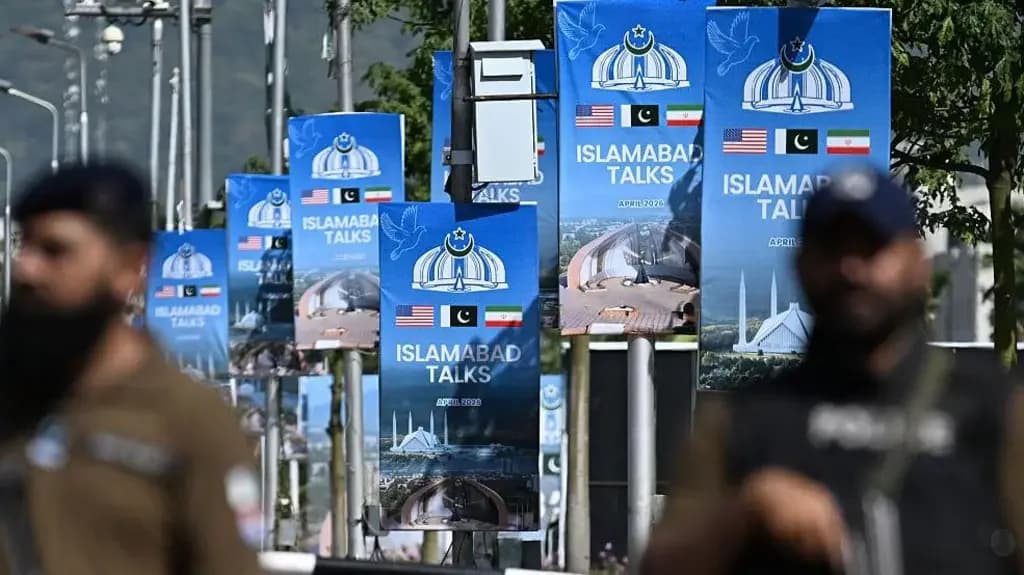
Efforts to broker a second round of peace talks between the United States and Iran collapsed Wednesday after the U.S. Navy seized an Iranian-flagged cargo ship in the Gulf of Oman, triggering retaliatory action and prompting Iran to withdraw from planned negotiations in Pakistan. The U.S. Navy fired on and seized the Iranian-flagged vessel after it attempted to bypass the U.S. naval blockad, an incident Iranian Foreign Minister Seyed Abbas Araghchi described as "an act of war and thus a violation of the ceasefire." Three vessels subsequently came under fire in the Strait of Hormuz. A second ro
Efforts to broker a second round of peace talks between the United States and Iran collapsed Wednesday after the U.S. Navy seized an Iranian-flagged cargo ship in the Gulf of Oman, triggering retaliatory action and prompting Iran to withdraw from planned negotiations in Pakistan.
The U.S. Navy fired on and seized the Iranian-flagged vessel after it attempted to bypass the U.S. naval blockad, an incident Iranian Foreign Minister Seyed Abbas Araghchi described as "an act of war and thus a violation of the ceasefire." Three vessels subsequently came under fire in the Strait of Hormuz.
A second round of face-to-face talks planned for Islamabad were thrown into uncertainty after Iranian officials threatened not to attend following the seizure. Iran ultimately did not attend, dissolving the planned meeting.
President Donald Trump extended the ceasefire indefinitely at Pakistan's request, saying the move would give Tehran time to present a "unified proposal." Prime Minister Shehbaz Sharif publicly thanked Trump for extending the truce.
Key unresolved issues in the negotiations include control of Iran's uranium stockpiles and the reopening of the Strait of Hormuz, through which a significant share of global oil supply passes. There is currently no confirmed timeline for when talks will resume.



Comments
No comments yet. Be the first to share a thought.