
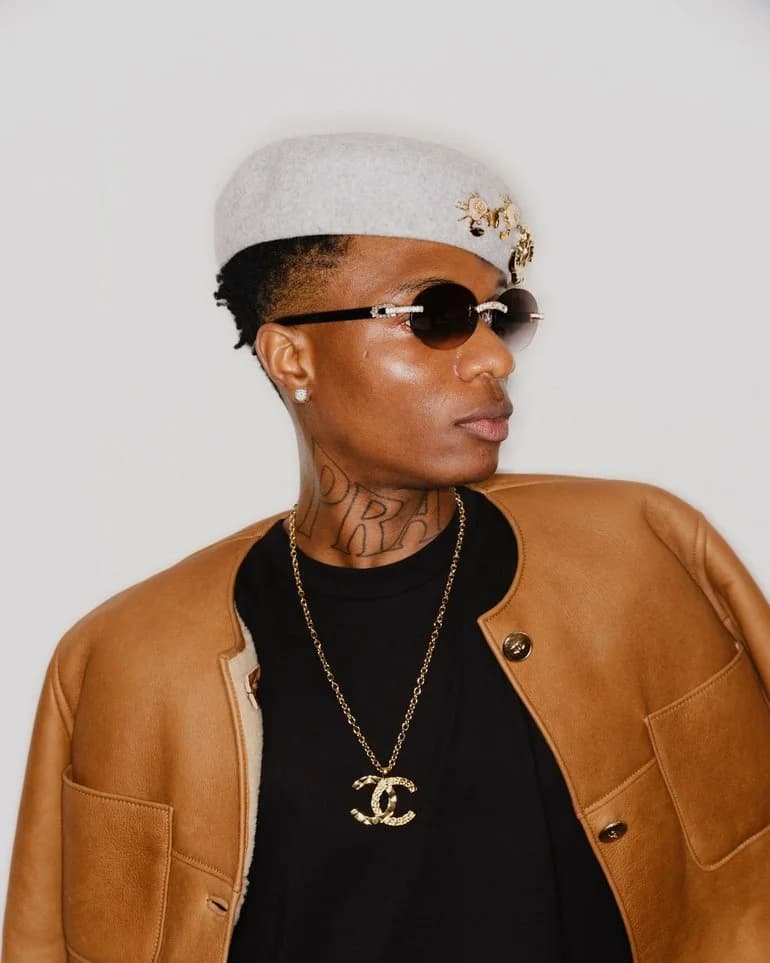
Nigeria’s Ayodeji Ibrahim Balogun, globally known as Wizkid, has once again sparked discussions across African and global music circles, following new claims suggesting he now ranks as the second best-selling African artist, behind Algerian Raï icon Cheb Khaled, who is often credited with more than 81 million career units sold. While exact rankings remain contested, one thing is certain: Wizkid’s commercial strength and global influence have secured his place among the most dominant African musicians of this generation. Wizkid first gained international attention after his 2010 breakout with
Nigeria’s Ayodeji Ibrahim Balogun, globally known as Wizkid, has once again sparked discussions across African and global music circles, following new claims suggesting he now ranks as the second best-selling African artist, behind Algerian Raï icon Cheb Khaled, who is often credited with more than 81 million career units sold. While exact rankings remain contested, one thing is certain: Wizkid’s commercial strength and global influence have secured his place among the most dominant African musicians of this generation. Wizkid first gained international attention after his 2010 breakout with Holla at Your Boy, later becoming one of the key figures behind the global rise of Afrobeats. His collaborations with artists such as Drake, Beyoncé, Tems, Justin Bieber, and Skepta helped redefine the reach of African music on global charts. The 2016 hit One Dance with Drake became one of the most-streamed songs in the world, further cementing his presence in mainstream music markets. In recent months, various entertainment outlets and fan-driven data aggregators have celebrated Wizkid as Africa’s No. 2 all-time best-selling artist. These numbers typically combine digital downloads, streaming-equivalent units, and international certifications. However, analysts caution that Africa still lacks a unified sales tracking system, leading to differences in how “units sold” are calculated. Some totals count only physical album sales, while others include streaming from platforms such as Spotify, Apple Music, and YouTube. Cheb Khaled’s long-standing commercial success provides a difficult benchmark. With global hits like Didi and Aïcha, and decades of sales across Europe, North Africa, and the Middle East, Khaled’s widely cited 81 million units reflect the strength of an artist whose catalogue thrived during the physical sales era. Even with the debate surrounding exact figures, Wizkid’s achievements remain undeniable: billions of streams worldwide, international awards, multiple Platinum and Gold certifications, sold-out arenas, and a decade of consistent cultural impact. His influence continues to shape the sound, identity, and commercial direction of contemporary Afrobeats. As the music industry becomes increasingly digital and transparent, clearer Africa-wide sales data may eventually settle these rankings. For now, the conversation continues—but Wizkid’s status as one of the most influential and commercially successful African artists in history is firmly established, regardless of numeric placement.


Comments
No comments yet. Be the first to share a thought.