
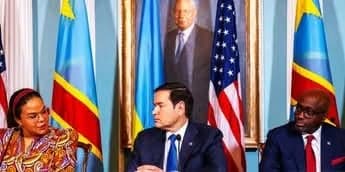
Representatives of the African Union (AU), Qatar and United States government agencies have joined security officials from Rwanda and the Democratic Republic of Congo (DRC) in Germany to advance the implementation of a US-brokered peace agreement aimed at addressing security challenges in eastern Congo.
The meeting, held in Garmisch, focused on finalising a draft operations order under the Joint Security Coordination Mechanism (JSCM), which is intended to guide the security commitments made by Kigali and Kinshasa.
According to the US Bureau of African Affairs, the proposed framework outlines steps for the DRC to address the Democratic Forces for the Liberation of Rwanda (FDLR), an armed group considered a security threat by Rwanda, while Rwanda undertakes to disengage its forces and lift defensive measures in line with the agreement.
However, the draft operations order still requires approval. The discussions therefore represent progress in coordinating the proposed security measures rather than confirmation that the planned military steps have begun.
From diplomatic commitments to implementation
The latest discussions build on the peace agreement signed by Rwanda and the DRC in Washington on June 27, 2025, under US President Donald Trump’s diplomatic initiative.
The agreement committed both countries to respecting each other’s territorial integrity, ending support for armed groups and strengthening security coordination.
In December 2025, Rwandan President Paul Kagame and DRC President Félix Tshisekedi signed the Washington Accords for Peace and Prosperity, further linking regional stability to economic cooperation and investment.
The broader framework seeks to strengthen regional economic integration through cooperation in mineral supply chains, energy, infrastructure, tourism and public health.
Washington has expressed interest in developing more transparent and reliable supply chains for critical minerals, including cobalt, copper, tantalum, gold and lithium, which are essential to global manufacturing and emerging technologies.
The initiative is also intended to formalise cross-border trade, reduce illicit mineral flows and create opportunities for investment across the region.
Economic opportunities and security concerns
Despite the diplomatic progress, implementing the agreements remains challenging as insecurity and fighting continue in eastern Congo.
The United Nations has welcomed the December agreement as an important step towards rebuilding trust between Rwanda and the DRC, while warning that continued violence threatens efforts to achieve lasting peace.
The US-brokered initiative also operates alongside Qatar-led negotiations between the Congolese government and the M23 rebel movement, which was not a signatory to the agreement between Kigali and Kinshasa.
The parallel diplomatic processes highlight the complexity of resolving the conflict, which involves multiple armed actors, regional security concerns and competing political interests.
While the proposed economic partnership could create opportunities for trade, infrastructure development and investment, critics have raised concerns about whether commercial interests will advance alongside adequate civilian protection, accountability for abuses and meaningful improvements in security.
A critical test for regional peace
The meeting in Germany represents another step in efforts to translate diplomatic commitments into coordinated action. Its effectiveness will depend on whether the proposed security measures receive approval and are implemented by the parties involved.
For Rwanda and the DRC, the central challenge remains turning political agreements into tangible improvements in security, cross-border relations and the lives of communities affected by conflict.
The success of the broader initiative will ultimately depend not only on economic cooperation and access to critical minerals, but also on sustained diplomatic engagement, mutual trust and the protection of civilians in eastern Congo.


Comments
No comments yet. Be the first to share a thought.