
Eastern Africa continues to face complex security challenges, with conflicts in Sudan, South Sudan and the Democratic Republic of Congo (DRC), alongside rising tensions between Ethiopia and Eritrea. These developments have renewed questions about the effectiveness of regional institutions established to prevent conflicts and respond to security crises.
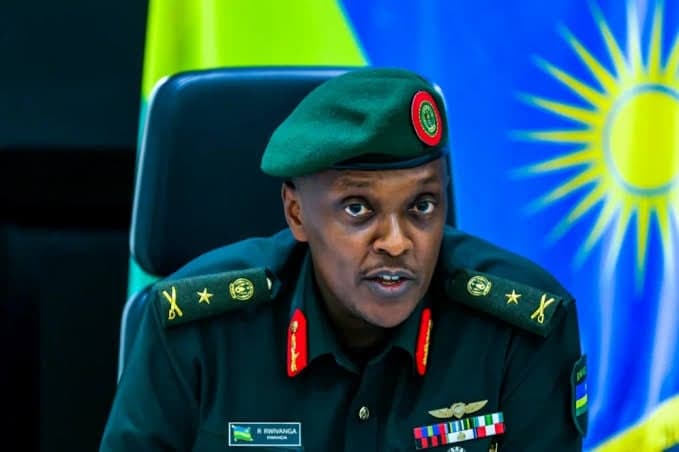
These issues were explored during an episode of The Long Form podcast released on 9 November 2026, featuring Brigadier General Ronald Rwivanga, a senior officer in the Rwanda Defence Force (RDF) and Director of the Eastern Africa Standby Force (EASF).
Rwivanga previously served as Rwanda's Defence and Military Spokesperson before assuming leadership of the regional security organisation in May 2026. His military experience and current regional responsibilities provide important context for his discussion on conflict management, military preparedness and African-led security cooperation.
Managing conflicts and addressing their root causes
Reflecting on conflicts affecting different parts of the continent, Rwivanga emphasised that the existence of conflicts is not necessarily the only measure of a state's stability. Rather, how governments manage internal tensions is what ultimately comes under scrutiny.
“Of course, conflicts will always be there in different parts of the continent. It is how the state manages those conflicts that will be put to scrutiny,” he said.
He pointed to migration, population movements and citizenship recognition as some of the factors contributing to tensions in different societies.
Discussing the situation in eastern DRC, he also referred to the growth of the M23 movement, highlighting the importance of addressing underlying political and social challenges.
Regional security and military preparedness
The discussion examined the importance of regional cooperation in responding to security threats.
Established as part of Africa's regional security architecture, the Eastern Africa Standby Force brings together military, police and civilian components from member states to support conflict prevention, crisis response and peace operations.
However, questions remain about the operational readiness of these forces and their ability to respond rapidly when regional crises emerge.
Rwivanga highlighted the importance of military preparedness, particularly the ability to deploy forces within an agreed timeframe.
“When we do our verification, is the force capable of moving within 14 days?” he asked.
He added that preparations were underway to ensure forces could deploy and sustain themselves throughout the duration of a mission.
“We are preparing our forces to be able to project, deploy and sustain themselves in the theatre over the period of the mission,” he explained.
Sovereignty and regional cooperation
The conversation further addressed the relationship between national sovereignty and regional security arrangements.
Rwivanga stressed that cooperation between African countries and regional organisations must respect the sovereignty of individual states.
“National sovereignty is respected and must be respected by regional organisations,” he said.
He also expressed readiness for countries to support one another in addressing shared security challenges.
“We are ready and agree to support one another,” he noted.
Africa's changing security landscape
Despite the challenges facing the continent, Rwivanga expressed optimism about developments in countries that have experienced conflict, observing that some were beginning to achieve greater stability.
He said: “I'm not frustrated at all. The countries which had conflict are now stabilising a little bit. I'm actually very happy.”
His remarks highlighted the importance of sustained regional cooperation, effective conflict management and military readiness in addressing Africa's evolving security environment.
As Director of the Eastern Africa Standby Force, Rwivanga occupies a regional leadership position within an organisation tasked with supporting peace and security across Eastern Africa.
As conflicts continue to affect different parts of the region, the effectiveness of regional security institutions will increasingly depend on their ability to move beyond established commitments and deliver practical responses when crises emerge.



Comments
No comments yet. Be the first to share a thought.