
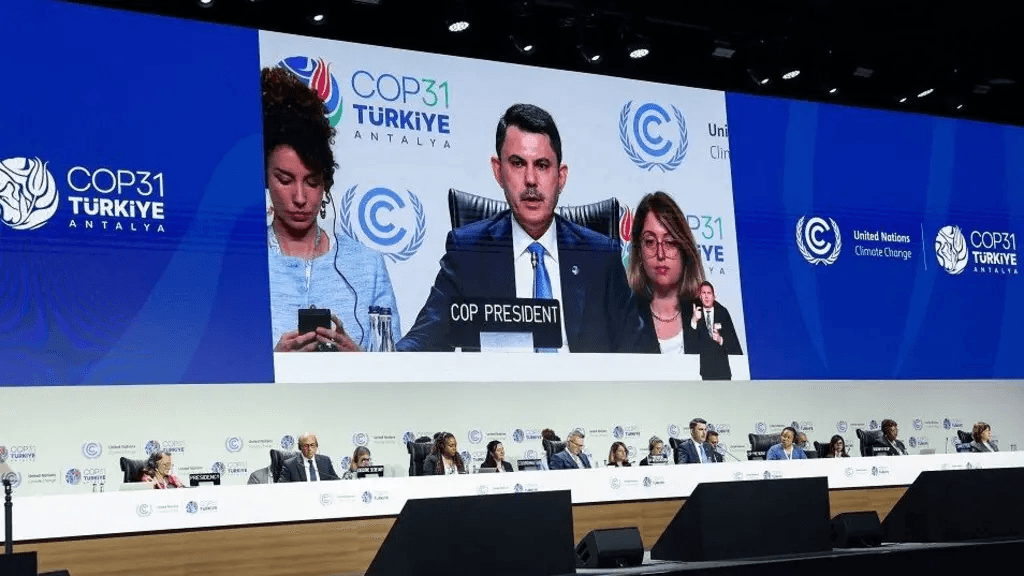
Negotiations at the 31st United Nations Climate Change Conference (COP31) in Antalya, Turkey, have entered another day of overtime as nearly 200 countries struggle to reach a common agreement on tackling climate change.
The talks resumed on Sunday, November 22, following the publication of a new draft agreement aimed at preventing the summit from ending without a deal.
One of the biggest disagreements remains whether countries should explicitly commit to moving away from fossil fuels, including oil, gas and coal, which are major contributors to global warming.
The European Union and several other countries have pushed for the commitment to remain in the final agreement. However, Saudi Arabia and other fossil fuel-producing nations have opposed including explicit language on the issue.
The latest draft, which runs to 12 pages, does not directly mention fossil fuels, despite the issue being a central demand of several participating countries.
Instead, it refers to the UAE Consensus reached during COP28 in 2023, when countries agreed to transition away from fossil fuels in energy systems.
The new document also calls for countries to increase the share of electricity in global energy consumption to 35 per cent by 2035. It retains an acknowledgement that the world is on track to exceed the 1.5°C temperature limit established under the Paris Agreement.
Climate finance is another major issue dividing negotiators. Developing countries are seeking stronger commitments to financial support to help them adapt to the growing effects of climate change, including droughts, floods and rising temperatures.
The disagreement has raised concerns that the negotiations could collapse without a final agreement. France has criticised the latest draft, describing it as weaker than the previous version, while European Union representatives have considered rejecting the proposed deal.
The summit's leadership has continued efforts to bring countries together and secure consensus. COP31 President Murat Kurum said delegates had worked day and night to build bridges and find common ground.
Meanwhile, Australian climate negotiator Chris Bowen acknowledged the uncertainty surrounding the outcome, saying the future of the negotiations would depend on how discussions progressed.
The talks are approaching a historic point, with the extended negotiations threatening to surpass the record for the longest climate conference discussions.
If countries fail to reach consensus, the negotiations could be suspended until next year, an outcome that has happened only once before in the history of the UN climate summits.
The outcome of COP31 is particularly significant for developing countries, which remain among the most vulnerable to climate change despite contributing relatively little to global greenhouse gas emissions.
Comments
No comments yet. Be the first to share a thought.