
In the heart of East Africa, nestled among a thousand rolling hills, lies Rwanda—a nation renowned not only for its breathtaking landscapes and incredible transformation after tragedy but also for a cultural heritage that pulses with resilience, wisdom, and pride. This documentary article takes you beyond the headlines to uncover 10 evidence-based cultural insights about Rwanda—its traditions, values, and unique identity—many of which remain unknown to the global audience. 1. GACACA: The Traditional Court That Rebuilt a Nation Visuals: Archive footage of outdoor community gatherings under tr
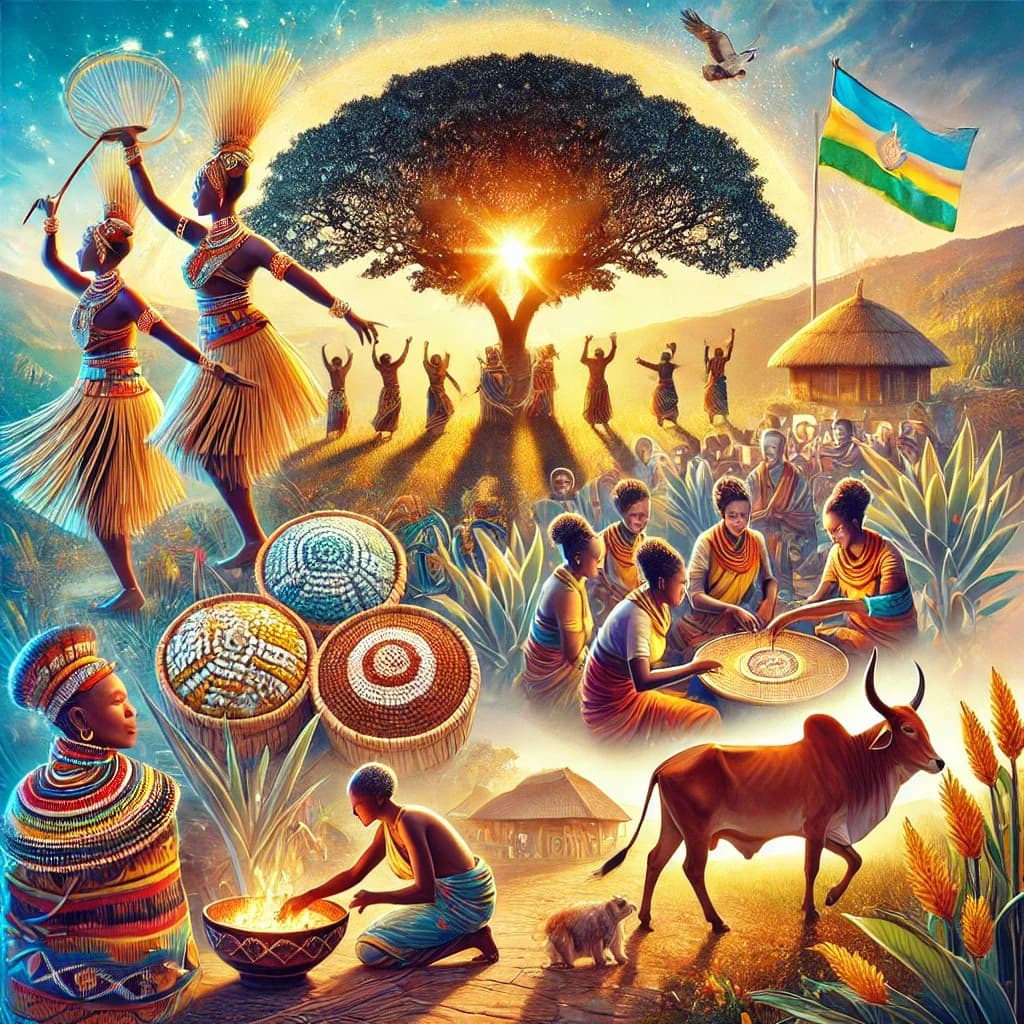
In the heart of East Africa, nestled among a thousand rolling hills, lies Rwanda—a nation renowned not only for its breathtaking landscapes and incredible transformation after tragedy but also for a cultural heritage that pulses with resilience, wisdom, and pride. This documentary article takes you beyond the headlines to uncover 10 evidence-based cultural insights about Rwanda—its traditions, values, and unique identity—many of which remain unknown to the global audience. 1. GACACA: The Traditional Court That Rebuilt a Nation Visuals: Archive footage of outdoor community gatherings under trees, people seated in circles. Gacaca, derived from the Kinyarwanda word meaning “grass,” was Rwanda’s community-based justice system. After the 1994 genocide against the Tutsi, the government reintroduced this traditional method to try over one million genocide-related cases. Evidence: According to the National Unity and Reconciliation Commission (NURC), Gacaca courts tried over 1.9 million cases from 2002 to 2012. They were praised by the United Nations Development Programme (UNDP) for promoting restorative justice and community healing. 2. UBUNYARWANDA: Reimagining National Identity Visuals: Schoolchildren reciting a pledge, community dialogues, flag-raising ceremonies. Rather than dividing citizens by ethnicity, Rwanda today promotes Ubunyarwanda—“Rwandanness”—a unified national identity. This shift aims to prevent the kind of divisions that fueled past conflicts. Evidence: A 2020 report by the Institute of Research and Dialogue for Peace (IRDP) shows that 84% of Rwandans now identify first as Rwandan before any other affiliation. 3. INTORE: The Dance of Warriors and Royal Courts Visuals: Intore dancers in traditional regalia, performing high leaps and synchronized steps. Intore, the “Dance of Heroes,” dates back to pre-colonial Rwanda, where it was performed before the king and during ceremonies to inspire courage. It combines dance, poetry, and percussion. Evidence: The Rwanda Cultural Heritage Academy describes Intore as part of intangible cultural heritage. It is now taught in cultural centers and performed at national events like Kwita Izina (the gorilla-naming ceremony). 4. AGASEKE: Woven Symbols of Peace and Empowerment Visuals: Women weaving baskets in cooperatives, market stalls lined with Agaseke. The Agaseke basket, also known as the “basket of peace,” is made with fine precision and often given as a gift. It’s more than a craft—it’s a post-genocide healing symbol and a product of women-led economic revival. Evidence: The Rwanda Cooperative Agency (RCA) reports over 4,000 women’s cooperatives across the country using traditional crafts, including Agaseke weaving, to boost household incomes and preserve culture. 5. THE ART OF SILENCE: Listening as Cultural Discipline Visuals: A quiet village meeting, children listening attentively to an elder storyteller. In Rwanda, silence is not awkward—it is powerful. In schools, homes, and public spaces, silence reflects emotional intelligence, humility, and respect, particularly for elders. Evidence: A 2016 sociolinguistic study by the University of Rwanda highlights how Rwandan communication emphasizes “low-volume” interaction, where nonverbal respect is critical. 6. THE MWAMI AND ROYAL INSTITUTIONS Visuals: Historical reenactments, traditional drums, the King’s court in Nyanza Museum. Until 1961, Rwanda was a monarchy led by the Mwami (king), who was both a cultural and spiritual figure. The royal court included ministers, advisors, and storytellers who maintained historical memory. Evidence: According to the Ethnographic Museum of Rwanda in Huye, the monarchy shaped laws, land systems, and cultural ceremonies for over 500 years. 7. KINYARWANDA: The Language of Unity Visuals: Teachers in classrooms, radio programs in Kinyarwanda, elders reciting proverbs. Unlike many African nations, Rwanda is united by one language: Kinyarwanda. This unique linguistic homogeneity supports national unity and helps preserve oral traditions. Evidence: A UNESCO language diversity report praises Rwanda’s single-language policy as a rare postcolonial success, stating it improves civic engagement and literacy. 8. UMUGANURA: Rwanda’s Ancient Thanksgiving Festival Visuals: Rural communities celebrating harvests, sharing sorghum beer and traditional food. Celebrated for over a millennium, Umuganura marks the beginning of the harvest season. It was once a royal ritual but has been revived as a national holiday celebrating food sovereignty and ancestral gratitude. Evidence: The Rwanda Academy of Language and Culture classifies Umuganura as the oldest cultural festival in Rwanda, first recorded in the 10th century under King Gihanga. 9. TRADITIONAL MARRIAGES: Rites of Unity and Symbolism Visuals: Gusaba ceremony, cows being gifted, elders giving blessings. Rwandan weddings are layered with symbolism. During Gusaba, the groom’s family formally requests the bride's hand, presenting cows and gifts as signs of respect and prosperity. Evidence: The National Institute of Statistics of Rwanda (NISR) finds that 77% of Rwandan marriages still incorporate traditional elements, even when followed by civil or religious ceremonies. 10. THE CULTURE OF COWS: Honor, Love, and Generosity Visuals: Children herding cows, cow dances, milk being served in calabashes. In Rwandan culture, cows are more than livestock—they are sacred. They symbolize life, honor, and familial generosity. Compliments often use cow-related phrases to express deep admiration. Evidence: The “Girinka” program, introduced by President Paul Kagame, is rooted in tradition. Since 2006, it has given over 350,000 cows to poor families to enhance nutrition and economic stability. As we reflect on these 10 cultural elements, it becomes clear that Rwanda’s strength lies not only in its economic transformation or its political stability—but in the enduring spirit of its people and their traditions. From the baskets woven in silence to the dances that echo ancestral pride, Rwanda is a living cultural archive—one that continues to inspire generations both at home and in the diaspora. About the Author: Dr. Ras Banamungu is a Rwandan-born cultural educator, author, and music therapist based in Australia. He is the founder of Laughter Percussion Academy and a regular contributor to HobeNews, where he promotes African cultural education, healing arts, and community empowerment.

Comments
No comments yet. Be the first to share a thought.