
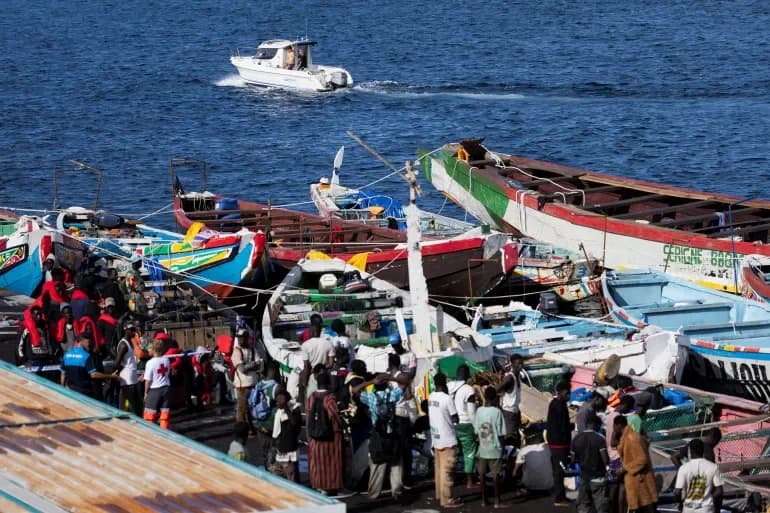
The island of El Hierro, located in Spain’s Canary Islands, declared a state of emergency after receiving more than 3,300 migrants in the first days of November 2026. The migrants arrived in approximately 30 boats from different parts of West Africa. This situation prompted the island’s authorities to request assistance from the Spanish government to help address the crisis.
Alpidio Armas, president of El Hierro’s island council, said they were concerned about the increasing number of migrants. He explained that declaring a state of emergency was intended to facilitate cooperation with national government authorities.
The island has a population of approximately 11,400 people. Receiving a large number of migrants within a short period has placed pressure on local services, particularly accommodation and healthcare. The island’s authorities indicated that the local hospital was facing difficulties due to the number of people requiring medical attention.
Fernando Clavijo, president of the Canary Islands regional government, said the number of migrants arriving continued to exceed the capacity of local authorities. He explained that some passenger transport vehicles had been reassigned to support migrant reception activities, while healthcare workers had also been brought from other islands to help address the situation.
Figures released by maritime rescue authorities indicate that 3,261 people were rescued in waters near the Canary Islands during the first six days of November 2026. This highlights the large number of people attempting to cross the Atlantic Ocean towards Spain.
The maritime route connecting West Africa to the Canary Islands is considered one of the most dangerous routes for migrants seeking to reach Europe. Many use small boats and spend long periods at sea, facing changing weather conditions and other challenges that can put their lives at risk.
According to reports, two people were confirmed dead aboard a boat attempting to reach the islands, while five others were suspected to have died during the journey, based on testimonies from survivors.
On the other hand, figures from Spain’s Ministry of the Interior show that between January and October 31, 2026, a total of 13,327 migrants arrived in the Canary Islands by sea. This represented a decrease of 5.5% compared with the same period in 2025.
However, in 2024, the islands received more than 46,000 migrants. The Canary Islands authorities continue to express concern that the recent increase could put additional pressure on healthcare services, transportation and migrant reception centres.
Migration remains one of the major challenges facing Spain, particularly in the Canary Islands, which are frequently used as an entry point by migrants from West African countries seeking to reach Europe.



Comments
No comments yet. Be the first to share a thought.