

A week that began with a viral rape allegation on TikTok has since unfolded into a national conversation, one that now places Nigerian singer Simi at its center. Not because of the allegation itself, but because of tweets she posted 14 years ago. It started on February 18, when a TikTok influencer known as Mirabel shared a graphic video alleging rape. The clip spread rapidly, reigniting public outrage over sexual violence in Nigeria. Simi, long vocal about ending rape culture, responded on X by urging men to hold one another accountable. Days later, the story shifted dramatically. A recording
A week that began with a viral rape allegation on TikTok has since unfolded into a national conversation, one that now places Nigerian singer Simi at its center. Not because of the allegation itself, but because of tweets she posted 14 years ago.
It started on February 18, when a TikTok influencer known as Mirabel shared a graphic video alleging rape. The clip spread rapidly, reigniting public outrage over sexual violence in Nigeria. Simi, long vocal about ending rape culture, responded on X by urging men to hold one another accountable.
Days later, the story shifted dramatically. A recording surfaced in which Mirabel allegedly admitted fabricating the claim. As public frustration grew, attention turned toward those who had amplified the original story, including Simi.
“I said stop raping women. I stand by it,” she wrote on February 22.
But what followed was more unexpected. Screenshots of tweets Simi posted in 2012, when she was 23 and helping at her mother’s daycare, began circulating online. The posts described playful, sometimes chaotic interactions with children. Critics reinterpreted them as inappropriate, with some going as far as alleging predatory conduct, accusations she strongly denied.
In a detailed statement, Simi explained that she had tweeted casually about daily life at a time when she was not yet a public figure.
“In 2012, I lived and helped out at my mom’s daycare while I was hustling my music. I tweeted everything that happened in my life, as we all did at the time… Nothing I tweeted was from perversion,” she wrote.
She acknowledged that some of the old tweets were being deleted, saying the decision was meant to protect her family from distress, not to conceal wrongdoing. Critics, however, argued that deletion suggested guilt. Simi firmly rejected that interpretation.
“I did not want to,” she said of removing the posts. “I’ve never been depraved in my life.”
By February 24, the matter had moved beyond social media. Nigeria’s National Agency for the Prohibition of Trafficking in Persons (NAPTIP) issued a public notice stating it would investigate credible reports of child abuse in daycare settings following online concerns.
“Following recent public discussions… we are committed to thoroughly investigating credible reports,” the agency stated.
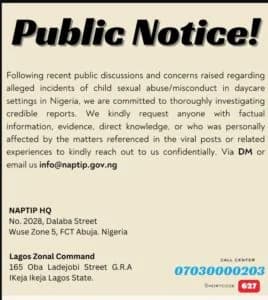
NAPTIP issued a public notice confirming it will investigate credible reports of alleged child abuse in daycare settings. on its official Instagram account.
NAPTIP did not name Simi directly but invited anyone with factual information to come forward. The development elevated the controversy from digital outrage to potential institutional review.
Complicating matters further, tweets from 2014 resurfaced in which Simi made remarks about the Igbo ethnic group. The posts drew criticism for promoting stereotypes. As of press time, she had not issued a separate response addressing them.
Public reaction remains sharply divided. Actor Deyemi Okanlawon defended her, arguing that weaponising old tweets distracts from the urgent issue of violence against women.
“When women say ‘STOP raping women’… your reply MUST only be YES,” he wrote on X.

The Nollywood actor Deyemi Okanlawon, publicly defended Simi, urging Nigerians to stay focused on ending sexual violence rather than revisiting decade-old social media posts.
Conversely, commentator Daniel Regha questioned the logic of describing deleted posts as “sensitive” if they were truly harmless, a view echoed by critics who found her explanation inconsistent.
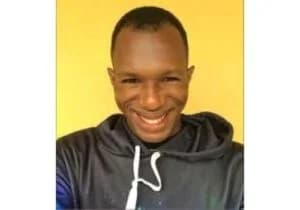
The social media commentator Daniel Regha questioned the consistency of Simi’s defense, arguing that describing the deleted tweets as “sensitive” raised further concerns.
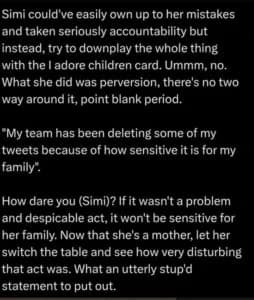
What began as one viral allegation has grown into something far larger than a single artist. It now touches on deeper questions about digital permanence, accountability, and the possibility of growth. When does an old tweet become a present-day trial? And how should societies balance scrutiny with fairness in an age that never forgets?
As of February 25, 2026, NAPTIP’s review remains evidence-dependent. Simi has not been formally named in any criminal inquiry and continues to maintain her innocence.
The story is still unfolding. But already, it has forced a divided public to confront difficult questions about memory, justice, and what it means to live permanently archived in the digital age.



Comments
No comments yet. Be the first to share a thought.