
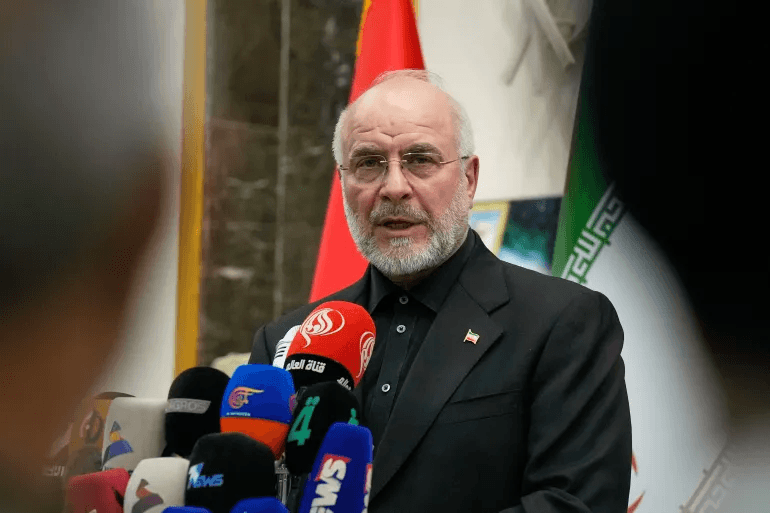
Iran has declared the United States defeated in the ongoing war involving Israel, insisting that Washington can no longer dictate the terms of a potential peace agreement as military tensions continue to spread across the Middle East.
Mohsen Rezaei, secretary of Iran’s Supreme National Security Council, said the conflict had changed the global political landscape, arguing that the United States was no longer in a position of dominance.
In a statement published on Sunday, November 22, Rezaei said the United States had become a country defeated in the war rather than a victor.
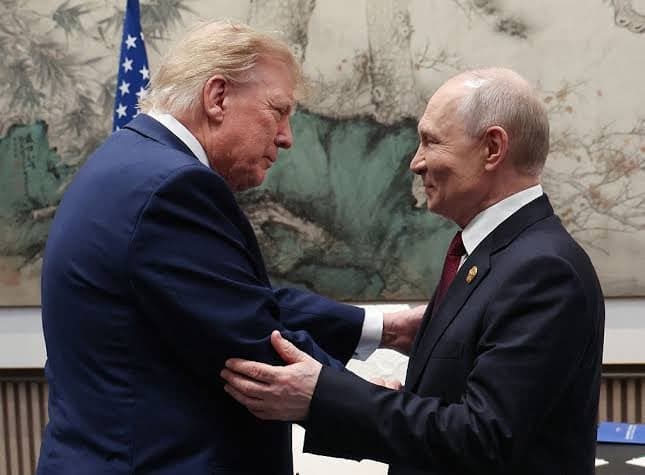
“The world has changed. Old photographs cannot turn back the current order to the past,” he said in a post on X.
His remarks came as diplomatic efforts to end the conflict continued, with Iran's Foreign Minister Abbas Araghchi indicating that Tehran remained open to negotiations despite growing tensions with Washington.
Iranian Parliament Speaker Mohammad Bagher Qalibaf also called for what he described as “sustainable deterrence”, arguing that the country needed concrete decisions to eliminate the threat of another war.
Meanwhile, fighting and security incidents have continued across the region.
In Saudi Arabia, military authorities said air defences intercepted a Houthi drone heading towards Riyadh. The Saudi-led coalition also reported intercepting a ballistic missile launched towards the kingdom's western Red Sea coast.
Bahrain's Interior Ministry reported that two people, a Bahraini citizen and a Pakistani resident, were injured in Iranian attacks on Saturday.
In Yemen, at least six people were reportedly wounded in an air strike targeting an oil company warehouse in the capital, Sanaa, according to Houthi-affiliated media.
The conflict has also intensified concerns over the humanitarian consequences of the war. Iran's Vice President for Women and Family Affairs, Zahra Behrouz-Azar, said more than 600 children had been killed during the US-Israeli military campaign, including pupils at schools in the southern city of Minab.
Separately, Iran announced that it had initiated legal proceedings in the United States and several European countries over the deadly attack on a school in Minab and the killing of its former Supreme Leader, Ayatollah Ali Khamenei.
UN-backed human rights experts have said the US strikes on the Minab school could potentially constitute war crimes, following reports that more than 178 people, including 120 children, were killed.
Beyond the battlefield, the conflict is also affecting regional economies. Several Gulf stock markets recorded declines on Sunday as continued attacks unsettled investors. Saudi Arabia's benchmark index fell by 1.7 per cent, while Qatar's market dropped 1.5 per cent.
Despite the diplomatic activity, the possibility of a lasting settlement remains uncertain. Iran continues to demand guarantees against future attacks, while US President Donald Trump has indicated that Washington is unwilling to accept Tehran's proposed conditions.
With military confrontations continuing and diplomatic positions still far apart, the conflict threatens to deepen instability across the Middle East.
Comments
No comments yet. Be the first to share a thought.