
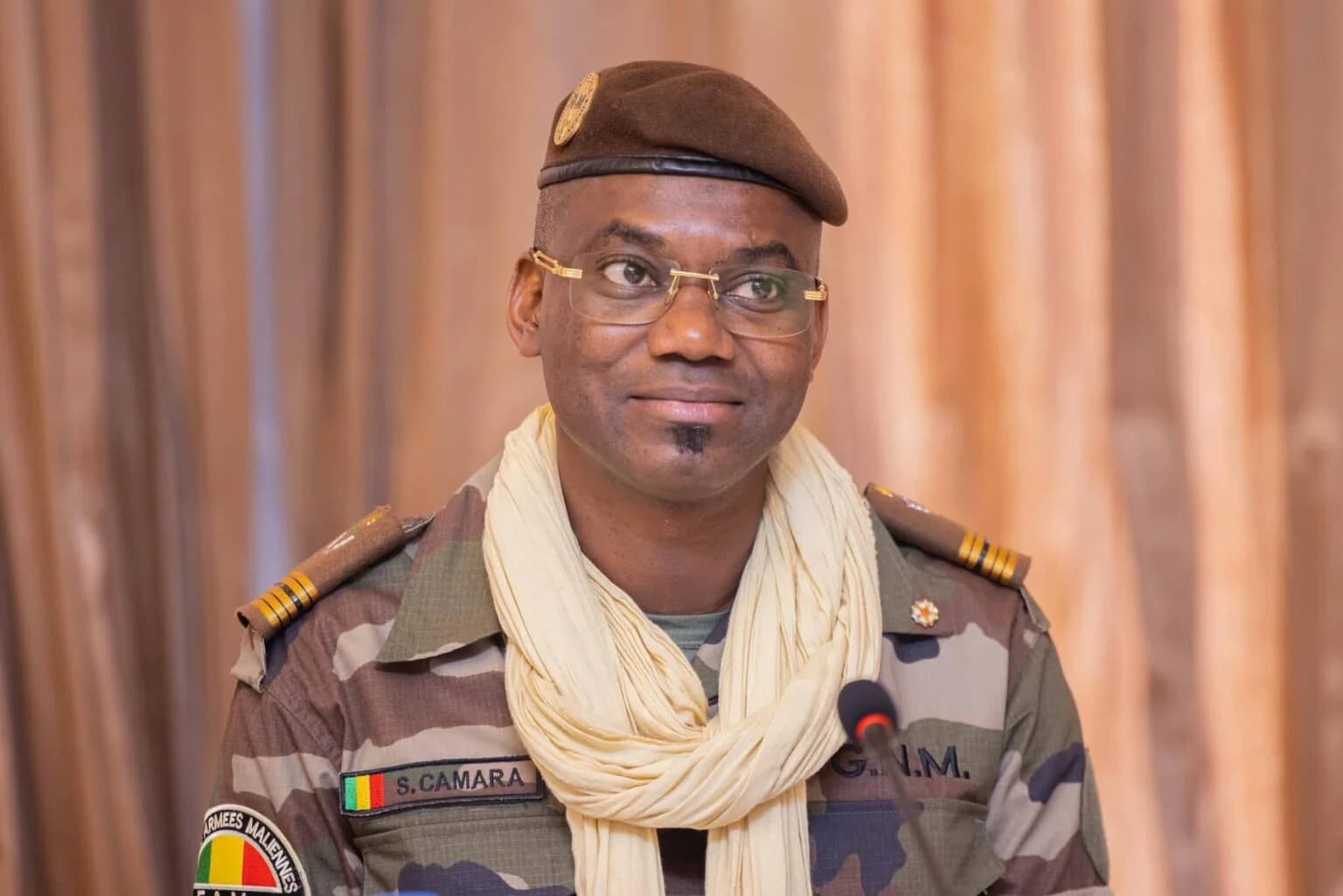
Mali's Defense Minister General Sadio Camara was killed on Sunday, April 26, after a wave of coordinated rebel attacks targeting multiple cities across the country on Saturday, marking one of the most significant escalations in Mali's years-long security crisis. Authorities said Camara's residence in the garrison town of Kati, near Bamako, was hit by a suicide car bombing followed by an armed assault, according to a government statement reported by the Associated Press. He exchanged fire with attackers before being wounded and taken to hospital, where he succumbed to his injuries, the statemen
Mali's Defense Minister General Sadio Camara was killed on Sunday, April 26, after a wave of coordinated rebel attacks targeting multiple cities across the country on Saturday, marking one of the most significant escalations in Mali's years-long security crisis.
Authorities said Camara's residence in the garrison town of Kati, near Bamako, was hit by a suicide car bombing followed by an armed assault, according to a government statement reported by the Associated Press. He exchanged fire with attackers before being wounded and taken to hospital, where he succumbed to his injuries, the statement said.
The coordinated attacks struck several locations, including Bamako, Gao, Kidal, and the central city of Sévaré, in what officials described as one of the most widespread offensives in recent years.
Responsibility for the assaults was claimed by two armed groups: the Jama'at Nusrat al-Islam wal-Muslimin (JNIM), an al-Qaeda affiliate active in the Sahel, and the Azawad Liberation Front (FLA), a nomadic Tuareg-led separatist movement.
The FLA said its fighters, alongside allied forces, participated in coordinated operations and claimed a major development in the north, stating that Russian Africa Corps troops and Malian forces withdrew from Kidal following the attacks after a local agreement. FLA spokesperson Mohamed El Maouloud Ramadan said “Kidal is declared free.”
The offensive also highlights the ongoing presence of Russia-backed forces in Mali, where Moscow-aligned security units have been deployed in support of the government’s counterinsurgency operations.
Analysts say the coordination between jihadist and separatist factions represents a significant shift in the conflict, increasing pressure on Mali’s military leadership and its foreign security partnerships.
The killing of Mali’s defense minister underscores a major escalation in a multi-front insurgency, with coordinated attacks stretching across the country and challenging both national forces and their foreign allies.
Comments
No comments yet. Be the first to share a thought.