
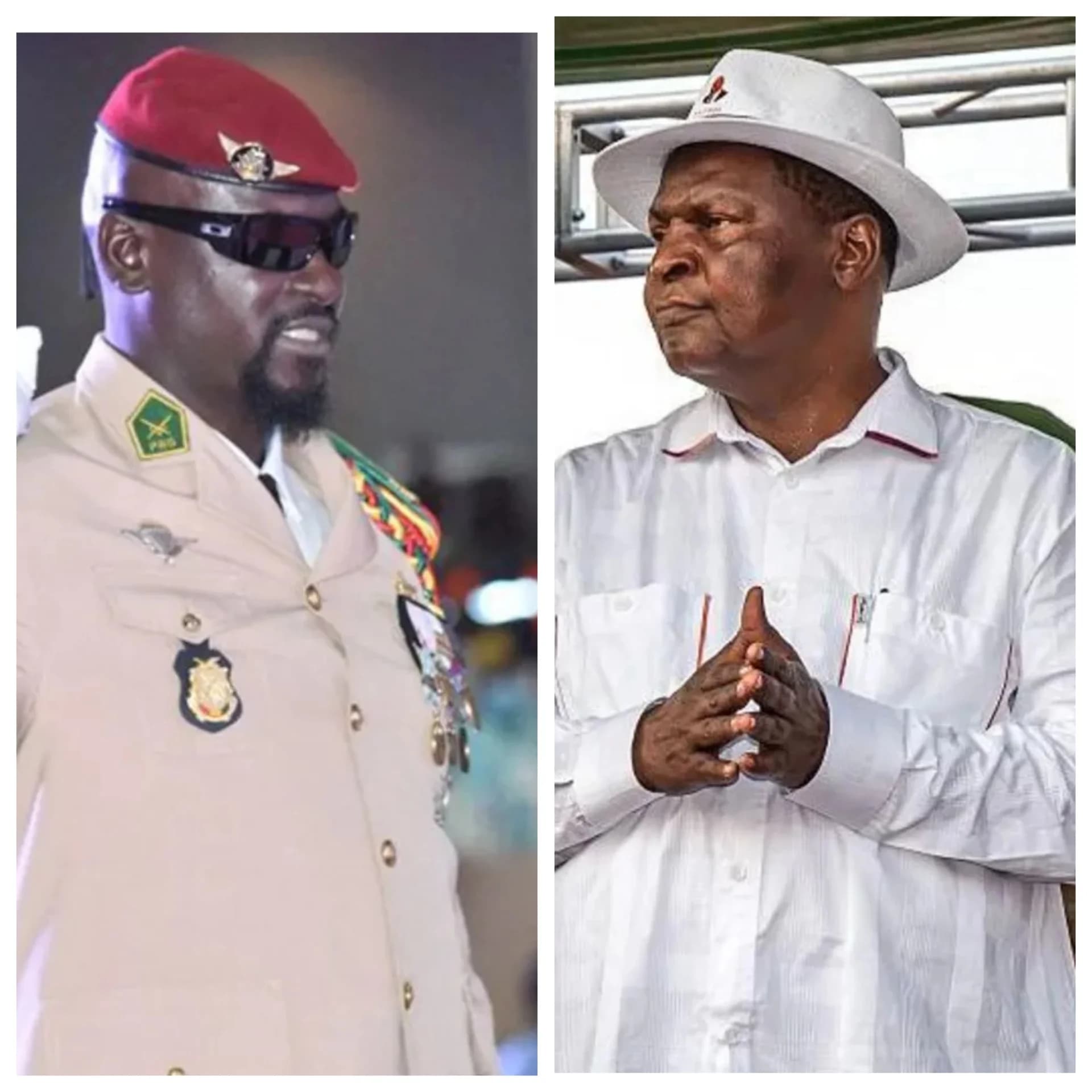
Citizens of Guinea and the Central African Republic (CAR) head to the polls on Sunday to elect their presidents for seven-year terms. Although both elections could technically proceed to a run-off, most observers expect the incumbents to secure outright victories in the first round with more than 50% of the vote. Beyond this surface similarity, the two contests reveal sharply contrasting political journeys, national contexts and international calculations. The Central African Republic is a vast, landlocked country and among the poorest on the continent. For decades, it has been plagued by ch
Citizens of Guinea and the Central African Republic (CAR) head to the polls on Sunday to elect their presidents for seven-year terms. Although both elections could technically proceed to a run-off, most observers expect the incumbents to secure outright victories in the first round with more than 50% of the vote. Beyond this surface similarity, the two contests reveal sharply contrasting political journeys, national contexts and international calculations. The Central African Republic is a vast, landlocked country and among the poorest on the continent. For decades, it has been plagued by chronic instability, driven by armed groups motivated by local grievances, criminal racketeering and political ambition. Between 2013 and 2016, only the intervention of African forces, France and later the United Nations prevented the country from sliding into deeper inter-communal violence. The government in Bangui, the riverside capital bordering the Democratic Republic of Congo, has long struggled to assert authority over distant northern and eastern regions. Despite these challenges, multi-party politics has largely survived. Opposition activity and protest have been tolerated to a notable degree, and the country retains a sense of national identity. Encouragingly, this year has seen two major rebel groups rejoin the peace process, beginning disarmament and demobilisation. The CAR has also established a pioneering special criminal court, staffed by both national and international judges, to prosecute serious human rights crimes. At the centre of the current election is President Faustin-Archange Touadéra, a mathematician and former university vice-chancellor. He first entered politics as prime minister under François Bozizé, a former coup leader who later became an elected president. Following Bozizé’s fall and a turbulent period of rebel rule, Touadéra emerged as a consensual post-conflict figure and was elected head of state. Now approaching the end of his second term, Touadéra is seeking a third mandate after pushing through constitutional reforms that removed presidential term limits. This move provoked a boycott by parts of the opposition, who argue that the reform undermines democratic principles. However, contrary to expectations, his most prominent rival, Anicet-Georges Dologuélé, has been allowed to contest the election.
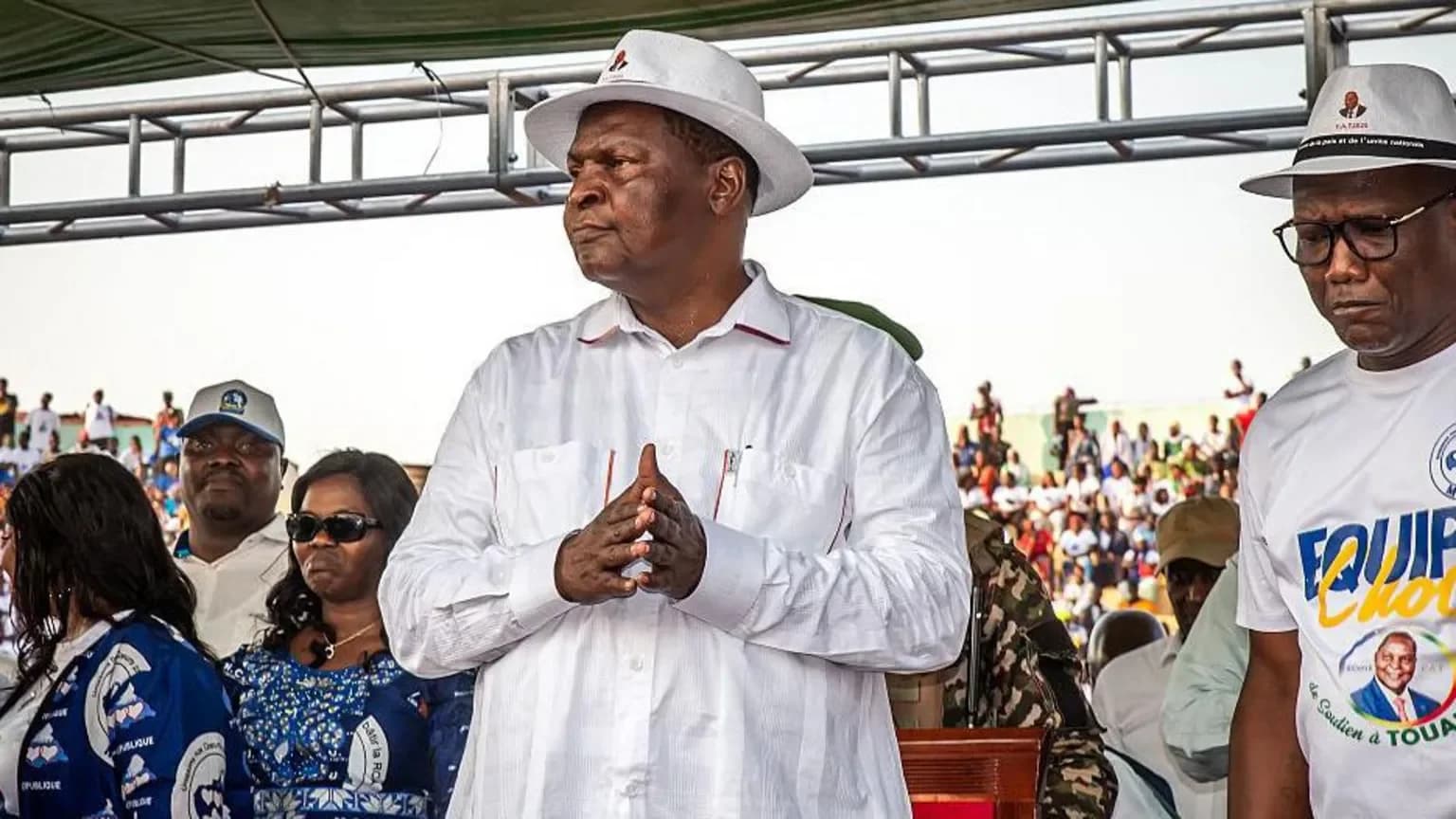
President Faustin-Archange Touadéra campaigns for a third term amid controversy over constitutional reforms that removed term limits.
International partners have shown limited appetite for confrontation. With war-ravaged Sudan just across the north-eastern border and internal fragilities still persistent, the UN, the EU and France appear inclined to prioritise stability. Although the CAR continues to rely heavily on Russian military support, Touadéra has worked to rebuild relations with France while maintaining close cooperation with the EU and the United Nations. In Guinea, the election tells a very different story. General Mamadi Doumbouya, who led the September 2021 coup that ousted long-serving president Alpha Condé, is now seeking to transform military rule into constitutional legitimacy through the ballot box. Condé’s overthrow was widely celebrated domestically. His controversial constitutional referendum allowing him to seek a third term, coupled with repeated episodes of security force brutality, had generated widespread public anger. International criticism of the coup was muted, and Doumbouya initially enjoyed significant goodwill. Since taking power, Doumbouya has pursued a gradual constitutional review process that laid the groundwork for Sunday’s vote, though the transition has taken longer than the Economic Community of West African States (Ecowas) initially demanded. Unlike the juntas in Mali, Burkina Faso and Niger, which later withdrew from Ecowas, Guinea chose to remain within the bloc. Doumbouya faces eight challengers, but the playing field is far from level. His image dominates the streets of Conakry, while the most prominent opposition figure of the past decade, Cellou Dalein Diallo, who enjoys strong support among the Peul community representing about 40% of the electorate, has been excluded from the race.
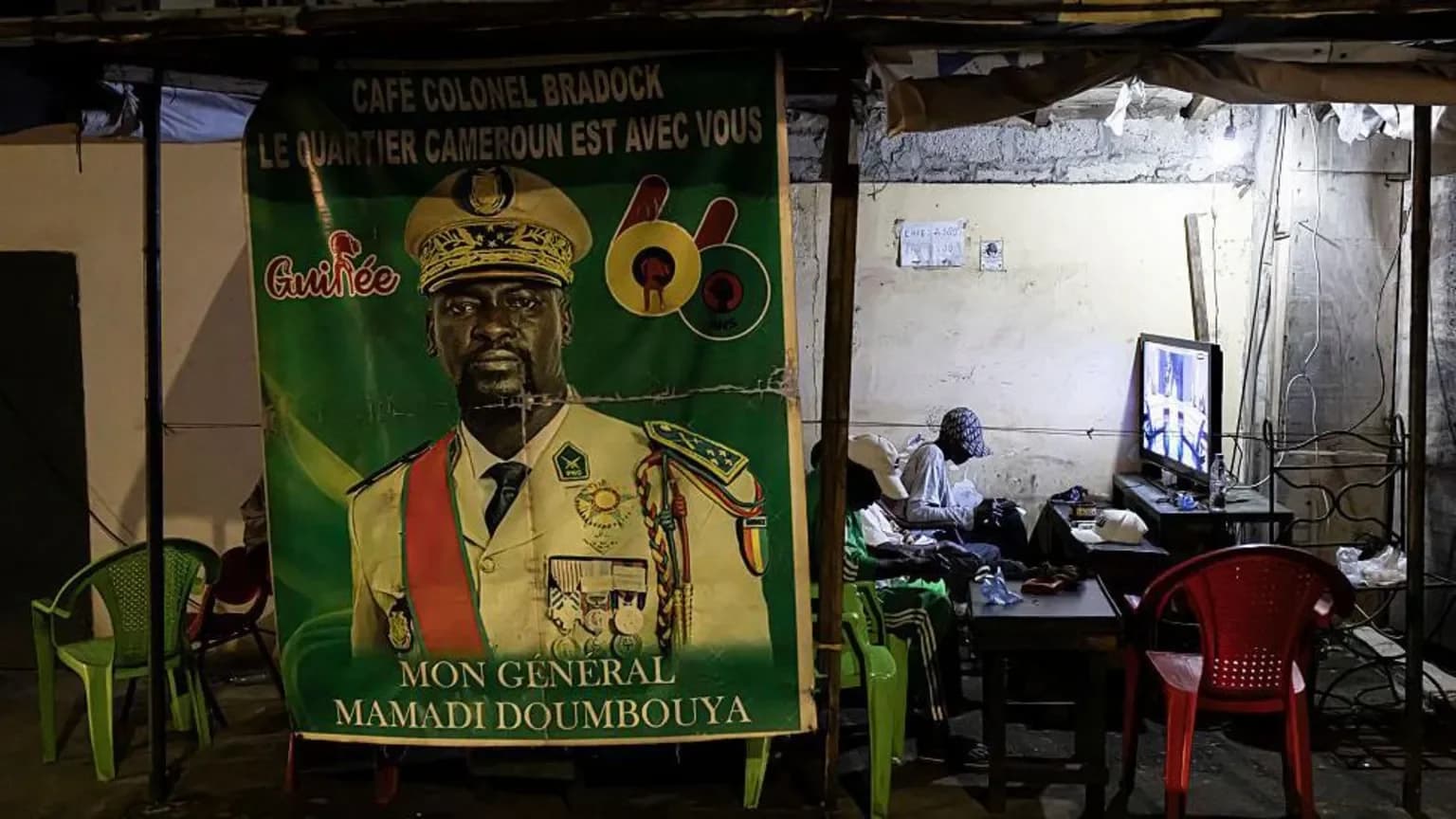
From military leader to presidential candidate: Mamadi Doumbouya seeks to convert coup-born power into electoral legitimacy.
Despite these constraints, the restoration of an elected government in Guinea has been welcomed with quiet relief by Ecowas and European governments. The region has been shaken by successive coups, the departure of three member states from the regional bloc and a recent attempted putsch in Benin. In this context, Guinea’s election is viewed as a step, however imperfect, toward restoring constitutional order. Doumbouya has also distinguished himself from neighbouring military regimes by maintaining close relations with Western partners, particularly France. Officials in Conakry describe the French Development Agency as one of their most supportive partners. He further earned international credit by accelerating the long-delayed trial related to the 2009 stadium massacre, in which around 150 opposition supporters were killed and many women were raped. Even so, concerns persist. Under Doumbouya’s rule, youth protesters have been shot, and civil society activists Billo Bah and Foniké Mengué were detained and have not been seen since. Regional and international reactions to these abuses have remained largely restrained. In both Guinea and the Central African Republic, elections are being held under imperfect conditions shaped by insecurity, constitutional manipulation and limited political space. One candidate is a former academic turned politician, the other a general seeking civilian legitimacy. Yet the likely outcome is the same: the consolidation of incumbent power. For many international partners, the calculation is clear. In a region grappling with coups, jihadist violence and fragile states, stability is being prioritised over strict adherence to democratic norms.
Comments
No comments yet. Be the first to share a thought.