
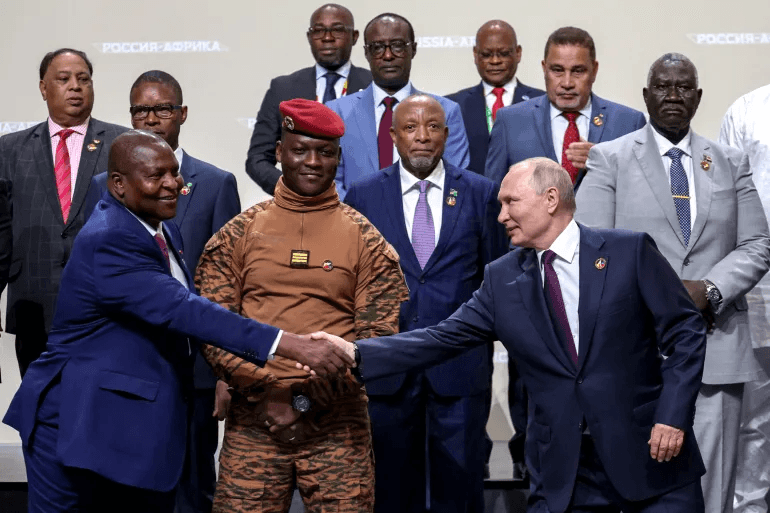
As African leaders gather in Moscow for the third Russia-Africa summit, questions are emerging over whether Russia’s growing influence is delivering meaningful development or deepening Africa’s economic and political dependence.
Russian President Vladimir Putin is expected to discuss trade, investment, security, energy and technology with African leaders. Moscow describes these relationships as mutually beneficial, but economic figures and security developments present a more complicated picture.
Russia pledged to increase annual trade with Africa to $40 billion, but merchandise trade reached approximately $27.1 billion in 2025. During the first eight months of 2026, Russia exported goods worth $14 billion to Africa while importing only $3.2 billion.
Wheat and fertiliser remain important Russian exports, helping African countries meet food needs. However, stronger partnerships should also promote African manufacturing, technology transfer and local employment.
Investment projects have produced mixed results. A proposed $1.2 billion fertiliser complex in Angola was abandoned in 2023, while Russia’s nuclear power project in Egypt relies heavily on a $25 billion Russian loan that must be repaid with interest. These examples highlight the importance of examining investment conditions, ownership structures and long-term financial obligations.
Russia has also expanded military cooperation across Africa, particularly in the Sahel and the Central African Republic. Through the Africa Corps and other Russian-linked forces, Moscow provides military training, equipment and assistance to governments facing security threats.
However, persistent insecurity and allegations of civilian abuses have raised concerns about the effectiveness and consequences of these partnerships. In Mali, control of the strategic city of Kidal has changed hands, illustrating the difficulty of achieving lasting stability through military operations alone.
Russia has strengthened relationships with military-led governments, raising questions about whether foreign assistance prioritises national security or the survival of incumbent leaders.
Moscow’s growing presence reflects competition among global powers for Africa’s resources, markets and political support. African countries have every right to cooperate with Russia, but such relationships should produce measurable benefits for their citizens.
Governments should demand transparent contracts, fair trade, responsible lending, local job creation and accountability for alleged human rights abuses. Media partnerships must also respect editorial independence.
Ultimately, Africa should judge international partnerships by their results, not diplomatic promises. The objective should be cooperation that strengthens African economies, protects citizens and preserves national sovereignty not dependence on any foreign power.

Comments
No comments yet. Be the first to share a thought.