
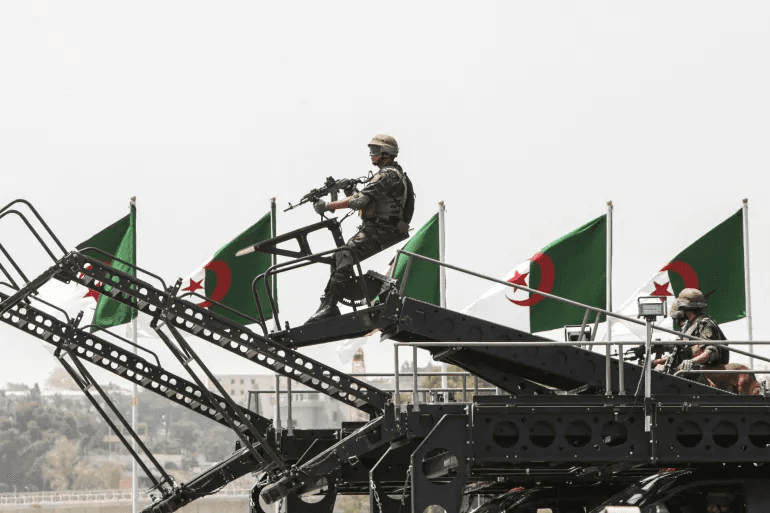
Algeria’s parliament has approved a military deployment to neighbouring Niger, marking a significant shift in the country’s traditional noninterventionist policy as regional insecurity and competition over strategic interests reshape the Sahel.
The lower house, the People’s National Assembly, ratified the proposal on Sunday, October 25, 2026, after the upper house, the Council of the Nation, unanimously approved it earlier that day. The number of troops and the deployment timeline have not yet been announced.
According to reports cited by the Associated Press, the mission is primarily intended to protect Algeria’s economic and strategic interests, particularly oil infrastructure associated with state-owned energy company Sonatrach.
Algerian Senator Belkacem Boulghiti said the deployment was designed to secure economic infrastructure rather than wage war in Niger.
The decision follows improving relations between Algiers and Niamey after previous diplomatic tensions. Nigerien President Abdourahamane Tchiani visited Algeria in February 2026, while Defence Minister Salifou Mody later travelled to Algiers for discussions on security cooperation.
In September, Algeria also dispatched four Russian-made Sukhoi Su-30 fighter jets, a transport aircraft and an aerial refuelling aircraft to Niamey following what Algerian authorities described as an attempt to destabilise Niger’s military-led government.
However, relations between Algeria and the Sahel have experienced difficulties. Algeria’s condemnation of Niger’s 2023 coup strained ties, while a dispute over the downing of a Malian drone in April 2026 contributed to diplomatic tensions with Niger, Mali and Burkina Faso.
Algeria shares extensive borders with Niger, Mali and Libya, making instability in the region a direct security concern. Armed groups linked to al-Qaeda and ISIL (ISIS) have expanded their activities across parts of the Sahel, while repeated military coups have weakened regional political stability.
The withdrawal of French and American forces from the region has also changed its security landscape. Russia has expanded military cooperation with Niger, Mali and Burkina Faso, creating new regional partnerships. Algeria’s proposed deployment could strengthen its influence while helping protect its borders and economic interests.
Energy infrastructure is another major consideration. Algeria is involved in plans for the Trans-Saharan Gas Pipeline, which aims to transport Nigerian natural gas through Niger to Algeria for potential export to European markets. Improved security could support such projects, although their progress also depends on financing, infrastructure development and political cooperation.
Algeria has traditionally avoided overseas military deployments, but its 2020 constitutional revision established conditions for sending troops abroad with parliamentary approval.
The latest decision signals a more active approach to regional security. Whether the mission remains limited to protecting infrastructure or develops into broader military cooperation will depend on operational details yet to be announced.

Comments
No comments yet. Be the first to share a thought.