
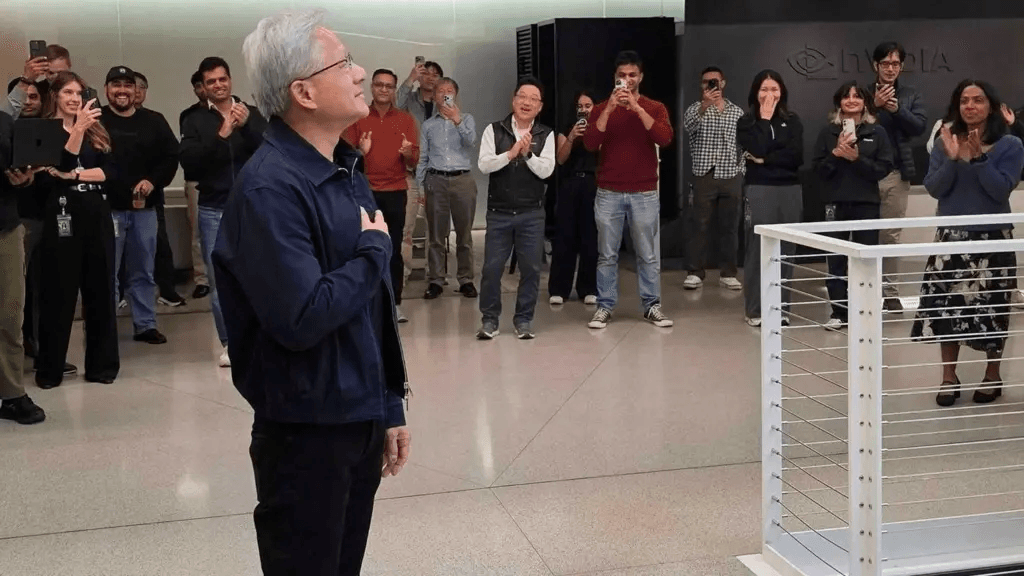
Asian stock markets surged on Tuesday following Nvidia’s decision to reinstate co-founder Jensen Huang as chief executive, ending a turbulent leadership crisis that had raised concerns over national security, corporate governance and the global artificial intelligence industry.
Huang’s return, announced on November 23 after a unanimous vote by Nvidia’s board, was welcomed by investors and technology companies across Asia, where the American chipmaker plays a central role in the rapidly expanding AI industry.
Markets in the region responded positively to the development, particularly in Taiwan, where Nvidia’s growth has contributed to rising demand for semiconductor manufacturing. Taiwan’s chip industry, including major manufacturer TSMC, has benefited significantly from the global expansion of artificial intelligence.
Huang, who stepped down on November 12, had been facing controversy following reports linking him to Alice Huang, a former executive at Singapore-based technology company Megaspeed, who was alleged by US officials to have connections to Chinese intelligence. He admitted to an extramarital affair and apologised to his wife. He was also accused of having another relationship with an Nvidia executive.
The controversy prompted Nvidia’s board to launch an independent investigation and intensified scrutiny of the company's business relationships and the movement of advanced AI chips to China.
US President Donald Trump, who publicly supported Huang’s return, claimed responsibility for influencing the decision, saying he had spoken to Nvidia’s board members both directly and indirectly.
Trump described Huang as a “great patriot” and said the government had no reason to believe his reinstatement presented a national security risk.
However, the decision has attracted criticism from both Republican and Democratic lawmakers, who are demanding greater accountability over Nvidia’s operations and the export of advanced semiconductor technology to China.
Huang is expected to testify before the US Senate Banking Committee on December 3, where lawmakers are expected to question him about export controls and national security concerns.
Meanwhile, Singapore has confirmed that investigations into Megaspeed will continue. Prime Minister Lawrence Wong said authorities would take firm action against any companies found violating the country's laws.
The company was placed on a US trade blacklist over allegations that it helped Chinese businesses gain unauthorised access to Nvidia's advanced AI chips through data centres in Southeast Asia. Megaspeed has denied wrongdoing.
Despite Huang’s return, analysts warn that tighter US export restrictions could continue to affect AI infrastructure investments in countries such as Singapore, Malaysia, Indonesia and Thailand.
Nvidia's leadership crisis may have ended, but questions surrounding technology security, international trade and the global AI race remain unresolved.


Comments
No comments yet. Be the first to share a thought.