
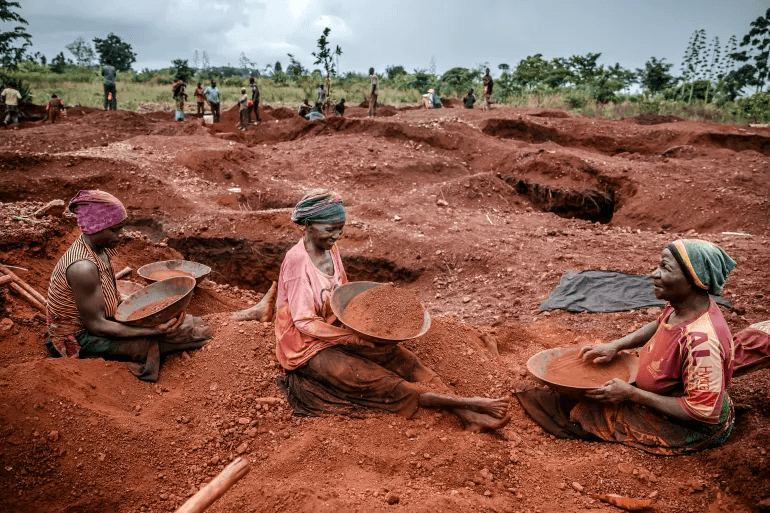
Africa’s vast mineral resources are increasingly becoming a centre of geopolitical competition as the United States, China and Russia seek to strengthen their influence across the continent.
From cobalt in the Democratic Republic of the Congo (DRC) to lithium in Mali and uranium in Niger, Africa possesses strategic minerals essential to electric vehicles, renewable energy, advanced technology and defence industries.
China has established a strong position through years of investment in African mining, mineral processing and infrastructure. Trade between China and Africa reached a record $348 billion in 2025, reinforcing Beijing’s position as the continent’s largest trading partner.
The United States is seeking to challenge China's dominance by securing alternative sources of critical minerals. In February 2026, President Donald Trump announced Project Vault, a $12 billion initiative aimed at establishing a strategic mineral stockpile for American industries.
Washington has also strengthened its partnership with the DRC to expand access to copper and cobalt while encouraging infrastructure investment and domestic processing.
Russia, meanwhile, has expanded its influence through security partnerships, particularly in the Sahel, where it maintains close relations with military-led governments in Mali, Niger and Burkina Faso.
Beyond mining, infrastructure has become another major area of competition. The United States, alongside European and African partners, is supporting the Lobito Corridor, connecting Angola's Atlantic coast to mineral-producing regions in the DRC and potentially Zambia.
For African governments, growing international interest presents opportunities to attract investment, create employment and strengthen regional trade.
However, concerns remain that foreign companies could continue extracting raw materials without delivering sufficient economic benefits to local communities.
The challenge for African countries is to negotiate partnerships that promote domestic mineral processing, technology transfer, skills development and sustainable industrial growth.
Ultimately, Africa's success should not be measured by which global power controls its mineral supply chains, but by how effectively African nations transform their natural resources into prosperity for their people.


Comments
No comments yet. Be the first to share a thought.