
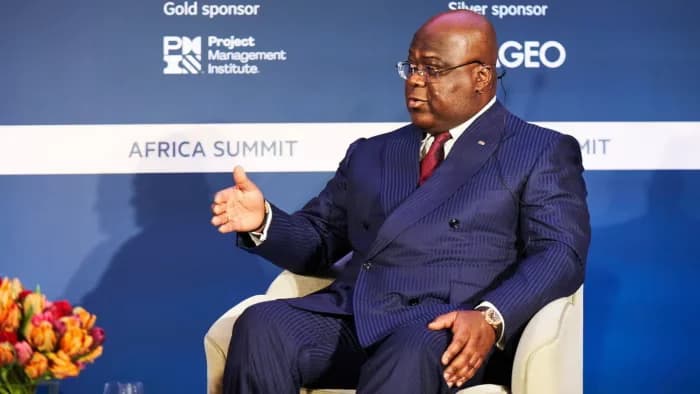
What exactly are the FDLR, mercenaries of every kind, and foreign contingents whether Burundian, from SADC, or backed by distant partners and other powers with opaque agendas seeking on Congolese soil? This question, posed with gravity, is far from rhetorical. It exposes the deep inconsistency of a reversed patriotism that, while draped in the language of sovereignty, systematically undermines its very foundations. In the name of an alleged defense of territorial integrity, a multitude of external armed actors are invited onto national territory, each driven by its own interests often at odd
What exactly are the FDLR, mercenaries of every kind, and foreign contingents whether Burundian, from SADC, or backed by distant partners and other powers with opaque agendas seeking on Congolese soil? This question, posed with gravity, is far from rhetorical. It exposes the deep inconsistency of a reversed patriotism that, while draped in the language of sovereignty, systematically undermines its very foundations. In the name of an alleged defense of territorial integrity, a multitude of external armed actors are invited onto national territory, each driven by its own interests often at odds with those of the Congolese nation. As a result, proclaimed sovereignty is gradually dissolved into a web of allegiances, security dependencies, and implicit diplomatic arrangements. National dignity is loudly proclaimed, yet the defense of the homeland is outsourced to foreign forces whose presence becomes, in practice, an ordinary mode of governance. Thus emerges a corrosive paradox: rhetoric glorifies the nation while practice alienates it. Sovereignty ceases to be a substantive principle and is reduced to an empty incantation, endlessly repeated in official forums and contradicted by realities on the ground. The nation finds itself weakened not only by external threats, but by this tacit consent to the internal erosion of the State. A State Undermined from Within When incessant appeals to patriotism coexist with the complacent reception of foreign armed groups and mercenaries, they no longer reflect love of country, but rather a political instrumentalization of national rhetoric. The illusion of a strong State is maintained, even as its most essential sovereign functions security, protection of citizens, control of borders are delegated elsewhere. This drift leads to a silent self-destruction: institutions lose their symbolic authority, the national army sees its mission undermined, and citizens watch helplessly as undeclared forms of tutelage multiply. Under the guise of cooperation or assistance, a gradual dispossession of the country’s ability to decide for itself takes shape. Independence, proclaimed as a sacred value, becomes a decorative fiction waved like a flag while dependency is quietly organized. In this context, the presence of foreign armies, militias, or external patrons is falsely presented as a guarantee of national salvation. Yet rather than resolving crises, this logic sustains and reshapes them, turning Congolese territory into a theater of competing interests. This inverted patriotism one that speaks of sovereignty while mortgaging it undermines civic trust, erodes the sense of belonging, and weakens the very continuity of the State. The contemporary Congolese tragedy lies in this stark reality: the defense of the homeland is proclaimed with great fanfare, while the doors are thrown wide open to those who covet it, exploit it, or manipulate it. As long as this contradiction persists, sovereignty will remain a word rather than a lived reality. It is urgent to break with this backward patriotism, to restore internal responsibility, to reject the dangerous ease of foreign military dependence, and to reaffirm a simple truth: a nation is not saved by delegation. Sovereignty is not negotiated it is exercised; it is not merely proclaimed it is proven through action.
Comments
No comments yet. Be the first to share a thought.