
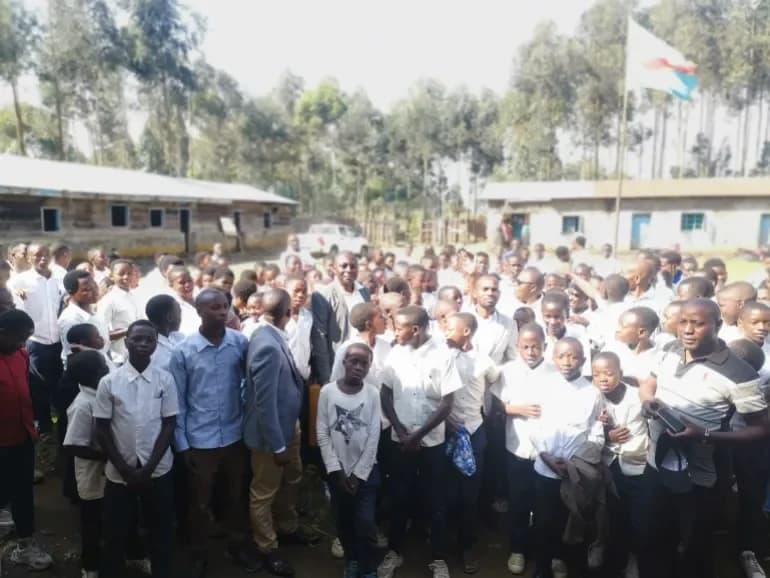
Children across the Democratic Republic of the Congo returned to school on Tuesday as the country battles its largest Ebola outbreak on record, raising concerns among parents and teachers, particularly in the worst-hit province of Ituri. Government figures showed 6,041 confirmed Ebola cases and 2,911 deaths as of August 31. Six of the country's 26 provinces have reported cases, with Ituri remaining the epicentre and recording 4,802 confirmed cases as of August 26. In Bunia, Ituri's provincial capital, some parents are questioning whether schools should reopen while the outbreak continues to
Children across the Democratic Republic of the Congo returned to school on Tuesday as the country battles its largest Ebola outbreak on record, raising concerns among parents and teachers, particularly in the worst-hit province of Ituri. Government figures showed 6,041 confirmed Ebola cases and 2,911 deaths as of August 31. Six of the country's 26 provinces have reported cases, with Ituri remaining the epicentre and recording 4,802 confirmed cases as of August 26. In Bunia, Ituri's provincial capital, some parents are questioning whether schools should reopen while the outbreak continues to spread. Parents fear children could become infected at school and then transmit the virus to their families, particularly because younger pupils may struggle to consistently follow hygiene measures such as handwashing. The outbreak is caused by the Bundibugyo virus, a species of ebolavirus different from the Zaire ebolavirus responsible for most previous Ebola outbreaks in the country. There is currently no approved vaccine or treatment specifically for Bundibugyo virus disease. The Ervebo vaccine, approved against Zaire ebolavirus, is being administered to frontline health workers, although its effectiveness against the current strain has not been established. The World Health Organization is supporting a clinical trial to assess its potential protection. Instead of closing schools nationwide, the government has adopted different measures depending on the level of risk. In high-risk areas, pupils will continue learning from home through printed materials and radio programmes. Education Minister Raissa Malu said 40 of 138 educational subdivisions in Ebola-affected provinces were affected, with 18 classified as high risk. The approach aims to protect children while preventing further disruption to education as authorities work to contain the outbreak.
Comments
No comments yet. Be the first to share a thought.