
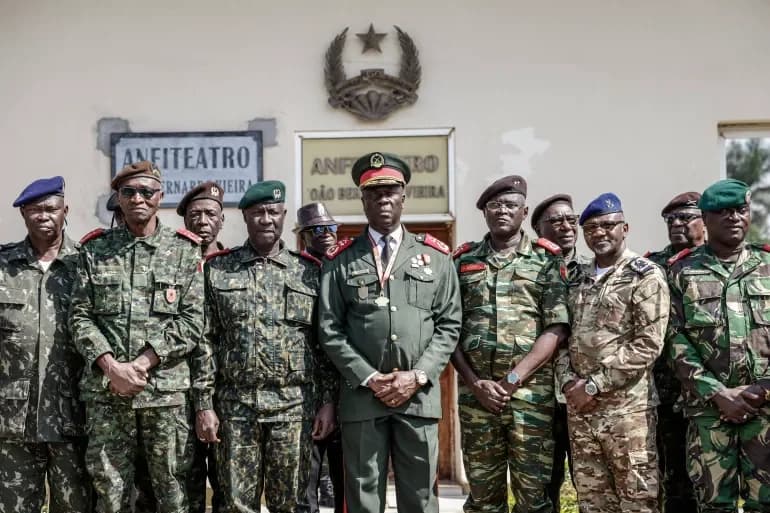
The military-led transitional government in Guinea-Bissau has announced that the presidential and parliamentary elections scheduled for December 6, 2026, have been postponed to November 26, 2028. The decision extends the country's transitional period, as citizens continue to await a return to an electoral system of governance.
The postponement was announced on November 26, 2026, through a decree signed by the transitional president, General Horta Inta-a. The authorities said the decision was based on the country's lack of sufficient technical capacity, equipment and financial resources needed to organise and conduct credible elections.
In explaining the decision, the authorities stated that the necessary conditions must first be established to ensure transparency, freedom, equal opportunities for candidates and public confidence in the election results.
The announcement came on the first anniversary of the military takeover in Guinea-Bissau, an event that disrupted the electoral process that had already taken place in the country.
On November 23, 2025, Guinea-Bissau held presidential and parliamentary elections. However, on November 26, 2025, the military seized power and overthrew President Umaro Sissoco Embaló before the official election results were announced.
At the time, both Embaló and his main challenger, Fernando Dias da Costa, had claimed victory. However, the Electoral Commission was unable to announce the final results following the military takeover.
Following the takeover, the military established a transitional administration led by General Horta Inta-a, which was given the responsibility of governing the country and organising elections that would return power to the people.
However, postponing the elections until 2028 means that the transitional period will extend beyond the one-year timeframe initially announced by the military authorities.
The Economic Community of West African States (ECOWAS) condemned the military takeover in Guinea-Bissau and called for the country to return to governance based on democratic principles. The regional organisation also called for a short transitional period with a clear timetable and a transparent process.
During discussions between ECOWAS representatives and various stakeholders in Guinea-Bissau, attention focused on finding a way to restore political stability and return the country to an electoral system of governance. However, no new official statement had been issued by the organisation confirming its response to the revised election date of 2028.
Another issue that has attracted attention in the country's governance is the constitutional reform undertaken in 2026. The reform changed the structure of government institutions, increased the powers of the President and reduced the number of members of Parliament from 102 to 65. These changes have also featured in discussions about the country's governance.
Guinea-Bissau is a country located in West Africa that has experienced years of political instability, coups and attempted coups. It gained independence from Portugal in 1973, but has since faced challenges that have affected the functioning of state institutions and political stability.
The postponement of the elections until November 2028 means that the people of Guinea-Bissau will have to wait longer before participating in presidential and parliamentary elections again. The coming period will be important in determining how the country moves out of the transition and returns to a government based on the choices of its citizens.
Comments
No comments yet. Be the first to share a thought.