
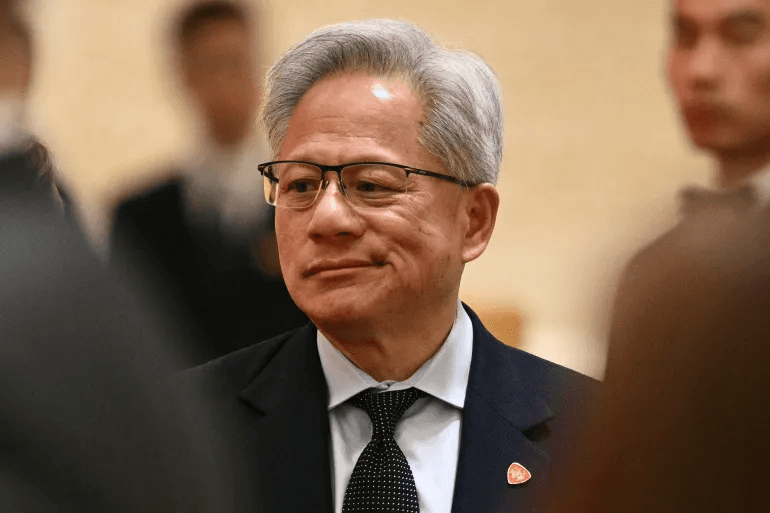
Nvidia CEO Jensen Huang is facing growing scrutiny after allegations emerged that a Chinese businesswoman with whom he reportedly had a romantic relationship may have been gathering intelligence for Beijing, raising fresh concerns over the protection of sensitive American technology.
The controversy has prompted Nvidia’s board to launch an independent investigation into whether Huang was targeted by a foreign intelligence operation, at a time when Washington and Beijing are competing for dominance in the artificial intelligence industry.
According to reports cited by Al Jazeera, US intelligence officials believe Alice Huang, a former senior executive at Singapore-based data centre company Megaspeed International, may have been recruited by China to obtain information about Nvidia’s chief executive and potentially influence the company's chip sales to China.
However, the extent of the alleged operation remains unclear. There is no confirmed evidence in the report that confidential company information or US national security secrets were transferred to Beijing. Neither Jensen Huang nor Alice Huang has been charged with a crime.
Jensen Huang acknowledged in a message to Nvidia employees on Sunday that he had been unfaithful to his wife, apologising for the impact of his actions on his family. He has previously described his interactions with Alice Huang as business-related and normal.
Nvidia said it had no reason to believe that national security or its proprietary information had been compromised. The company added that its chief executive supports the investigation and will cooperate fully.
The allegations have attracted attention in Washington, where lawmakers from both major political parties are demanding answers. Republican lawmakers have called for Huang to testify before Congress on November 18, while Democratic Senator Elizabeth Warren has urged stronger legislation to prevent advanced American technology from reaching China.
US authorities have reportedly been investigating Megaspeed since 2024 over suspicions that the company helped China obtain advanced Nvidia chips in violation of American export restrictions.
The controversy also comes with potential financial consequences. Nvidia shares fell by more than four percent in overnight trading into Monday, reflecting investor concerns surrounding the allegations and their possible implications for the company.
Beyond the corporate investigation, the case highlights the growing geopolitical importance of semiconductors. Nvidia supplies processors essential to the development and operation of advanced AI systems, making its business relationships and technology exports a significant issue for US national security policy.
Chinese Foreign Ministry spokesperson Guo Jiakun dismissed the allegations as an unsubstantiated narrative against China, while US President Donald Trump defended Huang, describing him as an honourable person.
As the investigation unfolds, the central question remains whether Nvidia's leadership was exposed to a foreign intelligence operation and whether any sensitive information was compromised.
The outcome could influence not only Huang's position and Nvidia's reputation but also Washington's approach to technology exports as the competition with China for AI leadership intensifies.



Comments
No comments yet. Be the first to share a thought.