
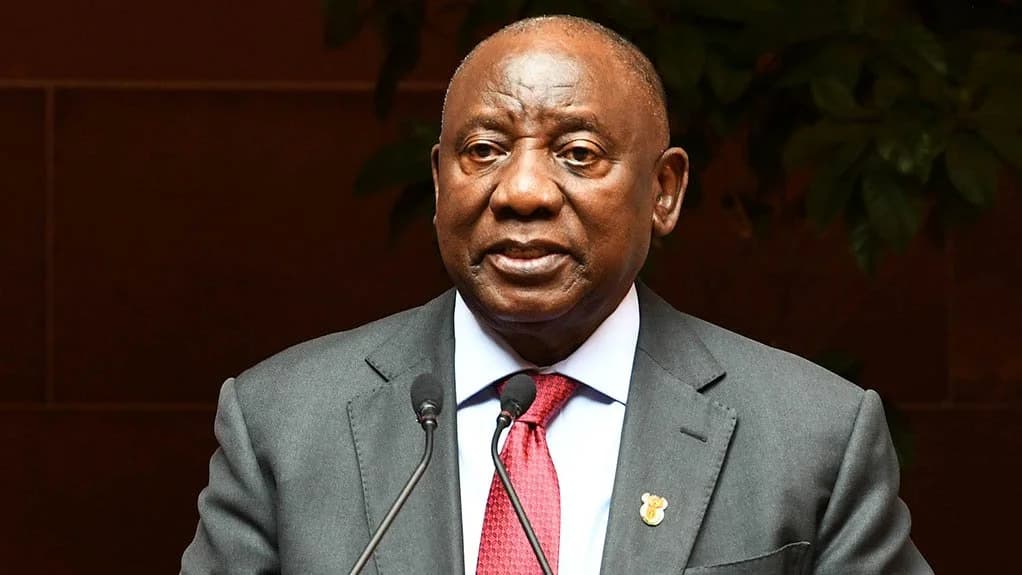
South Africa’s President Cyril Ramaphosa will visit the White House on Wednesday, May 21, for a high-stakes meeting with US President Donald Trump. The goal: to "reset" relations between the two countries after months of tension over land laws, aid cuts, and international disputes. “This visit gives us a chance to rebuild trust and talk openly about our differences,” said Ramaphosa’s spokesperson in a statement released Monday, according to Al Jazeera News. Why are US-South Africa Relations so tense? There are several reasons for the strained relationship: 1. Treatment of White South Afri
South Africa’s President Cyril Ramaphosa will visit the White House on Wednesday, May 21, for a high-stakes meeting with US President Donald Trump. The goal: to "reset" relations between the two countries after months of tension over land laws, aid cuts, and international disputes. “This visit gives us a chance to rebuild trust and talk openly about our differences,” said Ramaphosa’s spokesperson in a statement released Monday, according to Al Jazeera News. Why are US-South Africa Relations so tense? There are several reasons for the strained relationship: 1. Treatment of White South Africans President Trump recently accepted 59 white South Africans into the US as “refugees.” He claims they are being persecuted because of their race, and even suggested they face a “genocide.” Ramaphosa strongly denies this. “There is no genocide in South Africa,” he said at a business forum in Ivory Coast last week. “We are facing high crime across the country. Both white and Black people are victims.” The conflict deepened when South Africa passed a land reform law allowing the government to take land without paying for it especially from those who own a lot of it, such as white farmers. Ramaphosa says it’s meant to fix past injustices. “This law helps poor and disadvantaged groups, including Black South Africans, women and people with disabilities,” he said. But Trump and South African-born billionaire Elon Musk have both criticized the law. Musk said on social media, “Starlink was blocked in South Africa because I’m not Black.” South African officials denied this, saying companies must include disadvantaged people to get government deals. 2. US Aid and Trade Cuts Since returning to office, Trump has made several moves that hit South Africa’s economy: Paused aid to South Africa, including funds for HIV programs. The US had been covering nearly one-fifth of South Africa’s HIV budget. Cut extra aid in February, blaming the land laws and South Africa’s case against Israel at the International Court of Justice (ICJ). Imposed tariffs on South African goods, including a 55% tax on cars made in the country. “These are punitive measures that hurt both sides,” Ramaphosa said. “They threaten trade and shared growth.” The two leaders may also talk about the Africa Growth Opportunity Act (AGOA), a trade deal with the US that is up for renewal. It allows South Africa and other African countries to sell goods in the US duty-free. 3. South Africa’s Genocide Case Against Israel In December 2023, South Africa filed a case against Israel at the ICJ, accusing it of committing genocide in Gaza. The US, Israel’s close ally, strongly opposed this. Trump called South Africa’s action “aggressive” and paused aid as punishment. But Ramaphosa’s government says they will not back down. “Standing by our principles sometimes has consequences,” said Foreign Minister Ronald Lamola. “But we believe in justice and international law.” 4. Ukraine-Russia War Trump and Ramaphosa are also expected to discuss the war in Ukraine. Trump has promised to end the war quickly, though his efforts have not succeeded. South Africa, which has ties with both Russia and Ukraine, has stayed neutral and is calling for peace talks. “We must find a peaceful solution,” Ramaphosa said. He recently hosted Ukrainian President Volodymyr Zelenskyy and also spoke with Trump by phone. “We agreed that this war must come to an end,” he said. What’s Next? Ramaphosa’s office said the visit is a chance to “reset the strategic relationship.” But with so many disagreements on the table from land laws to global conflicts, it’s unclear how much progress the leaders can make. Still, both countries say they want a better future. “This is not about agreeing on everything,” a South African official said. “It’s about building respect and finding common ground."
Comments
No comments yet. Be the first to share a thought.