
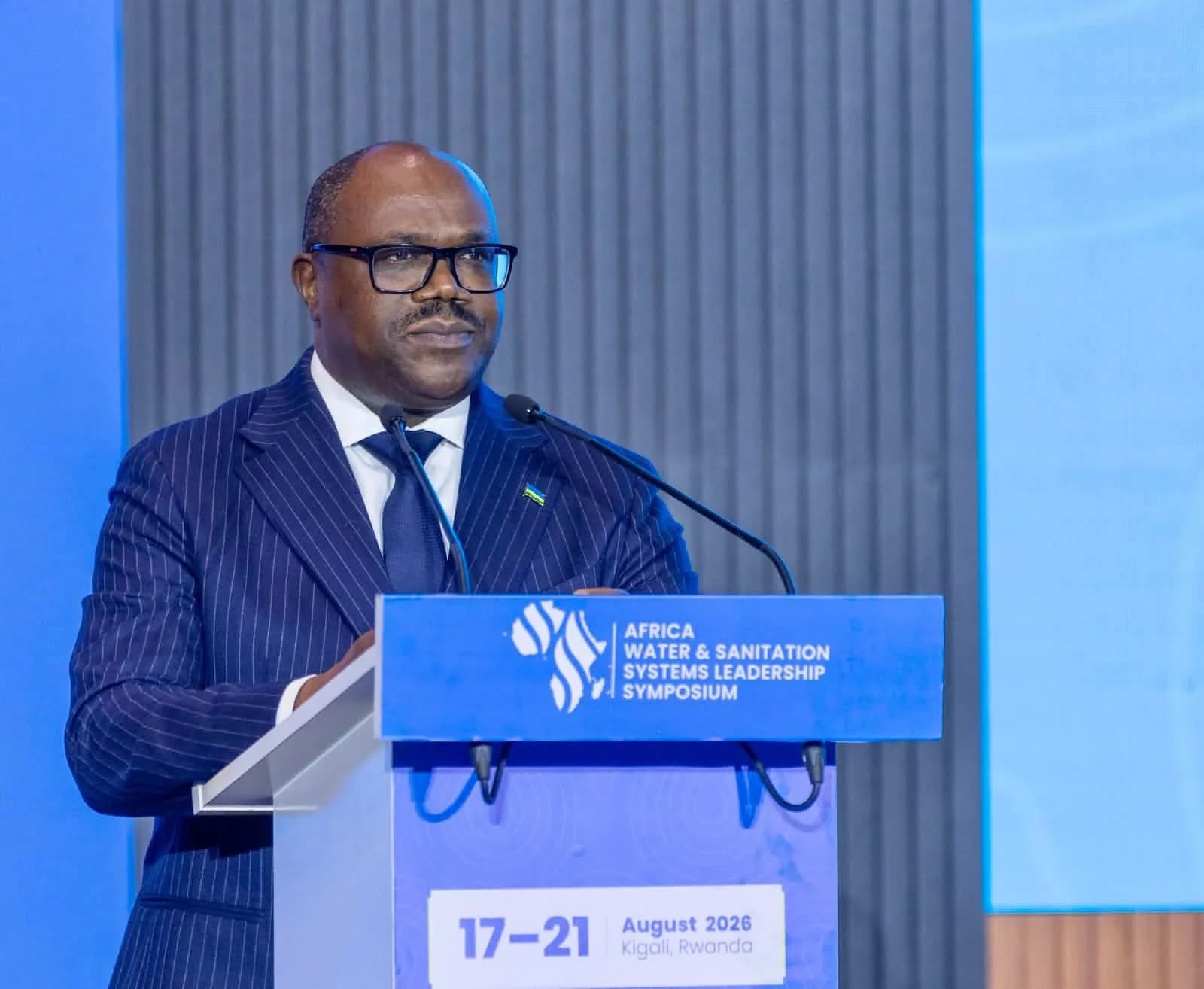
Rwanda’s Prime Minister, Dr Justin Nsengiyumva, has called on African countries to strengthen efforts to expand access to water, sanitation and hygiene services, warning that hundreds of millions of people across the continent still lack access to basic services. Prime Minister Nsengiyumva made the remarks on Tuesday while opening a high-level meeting bringing together African leaders and experts working in the water, sanitation and hygiene sector. The meeting is taking place in Kigali from August 17 to 21, 2026. According to figures presented by the Prime Minister, about 418 million African
Rwanda’s Prime Minister, Dr Justin Nsengiyumva, has called on African countries to strengthen efforts to expand access to water, sanitation and hygiene services, warning that hundreds of millions of people across the continent still lack access to basic services. Prime Minister Nsengiyumva made the remarks on Tuesday while opening a high-level meeting bringing together African leaders and experts working in the water, sanitation and hygiene sector. The meeting is taking place in Kigali from August 17 to 21, 2026. According to figures presented by the Prime Minister, about 418 million Africans lack access to basic water services, while 779 million do not have access to basic sanitation services. Another 839 million people lack basic hygiene services. The Prime Minister described the figures as a serious concern, particularly as African countries have invested significant resources in water, sanitation and hygiene infrastructure. He stressed that the challenge is no longer simply about building infrastructure, but also ensuring that existing facilities remain functional and continue providing reliable services to communities. «“Building infrastructure is important, but it is largely the beginning. Ensuring that what we build works well and continues to deliver services to people is the true measure of achieving what we need.”» Infrastructure Alone Is Not Enough Prime Minister Nsengiyumva noted that many African countries have constructed water networks and established water-treatment facilities. However, some of these infrastructure projects are no longer operational or are not delivering services at the level originally expected. He called for stronger institutions, effective governance, sustainable financing mechanisms and greater accountability among leaders responsible for managing the sector. The Prime Minister also argued that Africa’s water crisis should not be viewed solely as a shortage of financial resources. He said the continent has significant potential to mobilise domestic resources if water-sector governance and financial management are improved. According to figures cited during the meeting, better governance including appropriate tariff systems, improved revenue collection and effective financial management could help Africa mobilise approximately US$11.5 billion annually. He added that stronger domestic resource mobilisation could generate an additional US$17.5 billion each year. Africa Must Reduce Dependence on External Aid Prime Minister Nsengiyumva urged African countries to reduce their dependence on foreign assistance to finance water and sanitation development. He stressed that resources, whether generated domestically or obtained from development partners, must be channelled through trusted institutions capable of managing funds efficiently and delivering on their commitments. The Prime Minister also called for the outcomes of the Kigali meeting to translate into concrete action beyond the conference. He urged participants to continue working on the commitments made in Kigali ahead of another major meeting expected to take place in Abu Dhabi, United Arab Emirates, in December. Africa, he said, should arrive in Abu Dhabi not only with a list of challenges and requests, but also with practical solutions, clear commitments and a defined vision for the future of the continent’s water, sanitation and hygiene sector. The Kigali meeting comes at a critical time for Africa, where improving access to clean water, sanitation and hygiene remains essential to public health, economic development and the continent’s broader sustainable development goals.

Comments
No comments yet. Be the first to share a thought.