
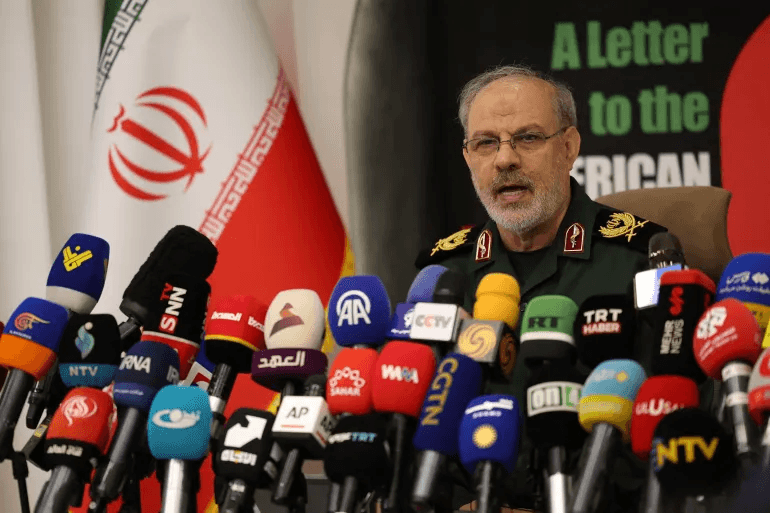
Iran has warned that any foreign forces attempting a ground invasion of its territory would face a devastating military response, as tensions with the United States and Israel continue to threaten a renewed escalation of the conflict in the Middle East.
Iran's Islamic Revolutionary Guard Corps (IRGC) said its forces were prepared for any military scenario, warning that American warships could face heavy attacks and that any territory entered by enemy forces would become a "killing ground".
Brigadier-General Yadollah Javani, the IRGC's deputy for political affairs, said Iranian forces were operating on the assumption that the United States or Israel could launch an attack at any moment.
He told Iran's semi-official Fars news agency that the country's military was fully prepared to respond to potential threats, including through pre-emptive and offensive operations.
The warning came as Iranian officials continued issuing strong statements against any renewed military confrontation. Defence Minister Mehrdad Akhlaghi said Tehran would deliver a "proportionate, decisive and impactful response" to any attack, adding that its adversaries would not determine the timing or consequences of Iran's response.
Iranian military spokesperson Mohammad Akraminia also warned that a future conflict would not be limited to West Asia and could last longer than previous confrontations.
The latest tensions follow approximately 40 days of intense fighting after the United States and Israel launched military operations against Iran on February 28, 2026. Hostilities eased in April, although sporadic attacks and heightened military tensions have continued.
Despite the military warnings, diplomatic efforts to prevent another outbreak of war remain underway.
US President Donald Trump said negotiations with Iran were progressing and described the discussions as going well, although he indicated that he was not in a hurry to reach an agreement. He also suggested that one or two Iranian nuclear facilities remained potential targets.
Iranian Foreign Minister Abbas Araghchi, meanwhile, described Washington's offer of dialogue as a positive step. An Iranian delegation travelled to Doha, Qatar, to engage with Qatari mediators as diplomatic efforts continued to revive a ceasefire between Washington and Tehran.
However, Tehran has maintained that it has no intention of entering negotiations over its nuclear programme under the current circumstances. Deputy parliamentary speaker Ali Nikzad said Iran would not negotiate on the nuclear issue, accusing Washington of repeatedly breaking its commitments.
The Strait of Hormuz remains another major point of concern. The strategic shipping route, through which a significant share of global energy supplies passes, has experienced severe disruption amid the conflict and restrictions on maritime traffic.
The situation became more concerning after Qatar's LNG tanker Al Mayeda was struck by unidentified objects while travelling through the Gulf on Friday night. Qatar's Nakilat shipping company confirmed the incident but said no crew members were injured and there was no environmental impact.
Iran has also submitted documents and photographic evidence of alleged US and Israeli attacks on maritime infrastructure to the International Maritime Organization, arguing that such incidents threaten international shipping and the safety of seafarers.
Meanwhile, the conflict continues to affect other parts of the region. Israeli strikes in southern Lebanon and Gaza have been reported, with hospital sources in Gaza reporting at least nine Palestinians killed in attacks since Sunday morning. In Yemen, three civilians were reportedly injured in an air attack on an oil facility in Houthi-controlled Hodeidah.
Regional governments have expressed concern about the possibility of renewed fighting. Anwar Gargash, diplomatic adviser to the UAE president, said the country hoped for a diplomatic breakthrough but remained prepared for further escalation.
Turkish Foreign Minister Hakan Fidan also called for diplomatic efforts to resolve the dispute, stressing the importance of reopening critical trade routes and preventing another US-Iran confrontation.
With military threats continuing alongside diplomatic engagement, the coming days could prove critical in determining whether negotiations produce a breakthrough or the region faces another phase of wider conflict.
Comments
No comments yet. Be the first to share a thought.