
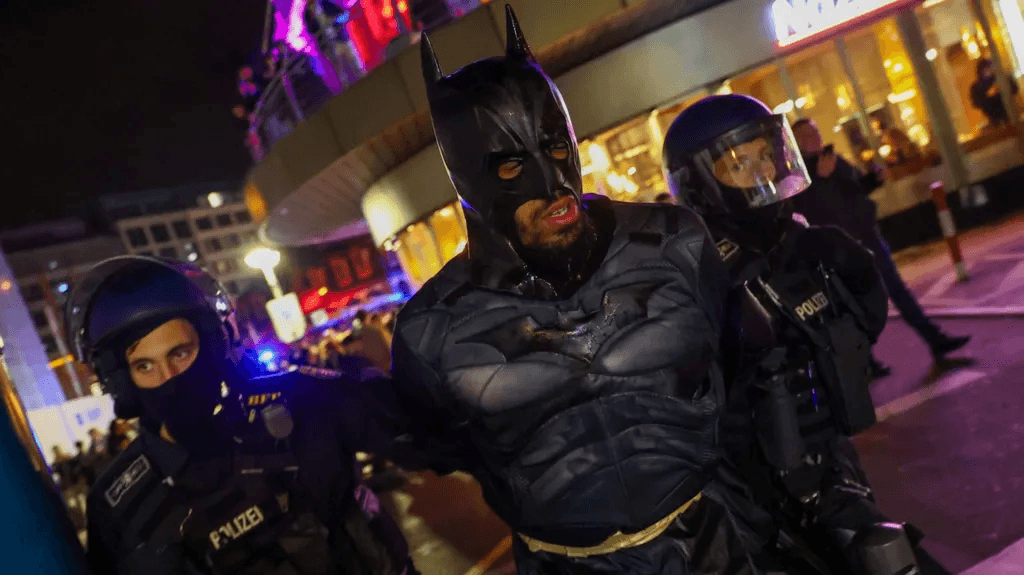
Violent clashes erupted in several German cities on Saturday night as demonstrations over the rising cost of living, education funding and proposed military service escalated, leaving shops looted, police officers injured and dozens of people arrested.
In Frankfurt, Germany's financial capital, rioters smashed shop windows and broke into businesses, stealing trainers and other items. Police also reported attacks on emergency services involving fireworks, stones, bottles and petrol bombs.
Authorities deployed special police units and used water cannon to disperse demonstrators. A large section of Frankfurt's main shopping street was closed as officers attempted to restore order. Police confirmed that several arrests had been made.
The demonstrations were organised by the youth campaign group Gen Z regelt, which translates to "Gen Z takes charge". Thousands of people initially joined largely peaceful protests demanding better funding for schools, improved public services, action on rising living costs and opposition to compulsory military service.
Authorities in Frankfurt, Munich and Berlin reported approximately 18,000 demonstrators, while organisers had expected significantly higher participation.
Gen Z regelt spokesperson Lina Friedrich said the movement was calling for peace, freedom and a fairer distribution of social responsibilities.
"We are against compulsory military service and in favour of a fairer distribution of the burden," Friedrich said, emphasising the need for stronger investment in healthcare and education.
However, the demonstrations deteriorated after nightfall. Frankfurt police reported that the windows of several businesses, including a gun shop, had been smashed. Officers also seized two weapons following the arrest of a suspect.
Hesse Interior Minister Roman Poseck accused approximately 100 identified left-wing extremists of infiltrating the demonstration, describing the violence as shameful and warning against Germany experiencing unrest similar to that seen in France.
Violence was also reported in other German cities. In Cologne, police officers were attacked near the main railway station, with demonstrators throwing bottles and launching a bicycle. In Berlin, police reported that 27 officers had been injured, while up to 56 people were temporarily detained. Meanwhile, Hamburg authorities recorded approximately 120 arrests after groups set off fireworks and burned barricades.
The unrest in Germany coincided with another weekend of demonstrations across Europe, highlighting growing frustration among young people over economic pressures and public services.
In France, more than 320,000 people participated in a third consecutive weekend of largely peaceful protests demanding action on the rising cost of living and deteriorating public services. However, clashes in Toulouse, Lyon and Marseille resulted in more than 500 arrests. Police deployed tear gas in several locations as demonstrations intensified.
Similar protests were reported in Italy, where demonstrators clashed with police in Rome and Turin. In Portugal, thousands marched against proposed changes to rental legislation, arguing that the measures could worsen the country's housing crisis. Police also moved to clear a tent camp established by protesters.
Across Europe, young people have increasingly taken to the streets in countries including France, Belgium, Ireland, Spain, Portugal, Italy, Greece, Serbia and Albania.
Although their demands differ, the demonstrations share common concerns, particularly rising living costs, limited access to affordable housing, underfunded education systems and reductions in public services.
The latest unrest reflects growing pressure on European governments to respond to the economic and social challenges facing younger generations, as peaceful demonstrations increasingly risk being overshadowed by violence and confrontations with security forces.

Comments
No comments yet. Be the first to share a thought.