
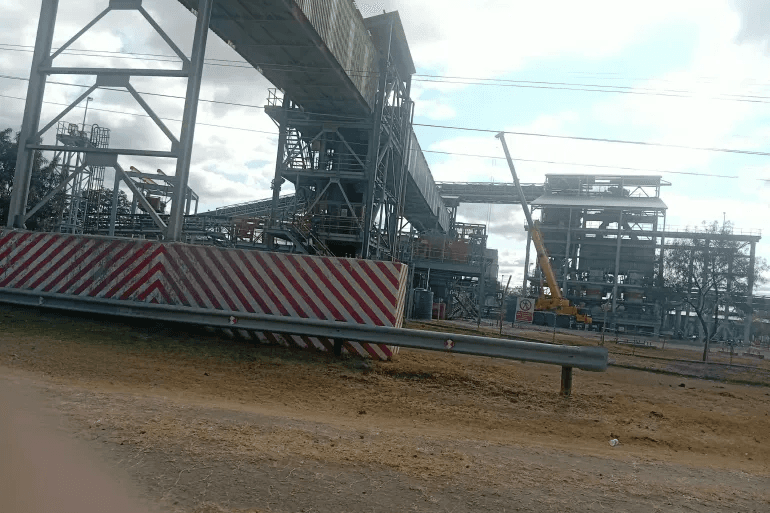
Zimbabwe’s platinum industry is generating billions of dollars, yet residents living near major mining operations say they still lack adequate roads, schools and clean water, raising questions about how the country’s mineral wealth benefits local communities.
Zimbabwe earned a record $8.5 billion from mineral exports in 2025, up from $5.9 billion in 2024, according to figures from the Chamber of Mines of Zimbabwe. Despite the growth, communities in the country’s platinum-rich Great Dyke region say development has failed to keep pace with mining activities.
In Mhondoro-Ngezi, where Zimplats operates major mining and processing facilities, residents are calling for better infrastructure and improved public services.
Some children reportedly walk between 15 and 25 kilometres to attend secondary school, while overcrowded classrooms have forced pupils at Turf Primary School to study under trees.
For some families, poverty remains a daily struggle. Sakina Lice, a mother of 11 children and grandmother of nine, told Al Jazeera that collecting discarded plastic earns her approximately $20 a month to support her household. She appealed for mining companies to empower women through income-generating projects.
Water pollution is another concern. Residents have alleged that sewage from the mining area has affected the Ngwazani River, which communities previously used for household activities and small gardens. Flooding also makes it difficult for some children to cross the river to school.
Community leaders want mining companies to invest more in roads, schools, water supplies and other infrastructure that benefits residents beyond mine operations.
However, mining companies point to their existing contributions. Unki Platinum Mine says it has invested an average of $1.5 million annually in community development over the past five years, supporting education, healthcare, water and sanitation. The company also reports having built 63 boreholes and supported 32 schools.
Nevertheless, residents argue that existing initiatives have not fully addressed the growing needs of mining communities. Zimplats and Mimosa had not responded to Al Jazeera’s questions by publication.
The situation highlights a broader challenge for resource-rich African countries: turning mineral wealth into tangible improvements in people's lives.
Zimbabwe’s platinum industry continues to offer significant economic opportunities, but residents want to see those benefits reflected in better schools, reliable roads, clean water and sustainable livelihoods. The question is no longer just how much platinum the country produces, but how much of that wealth reaches the communities living above it.



Comments
No comments yet. Be the first to share a thought.